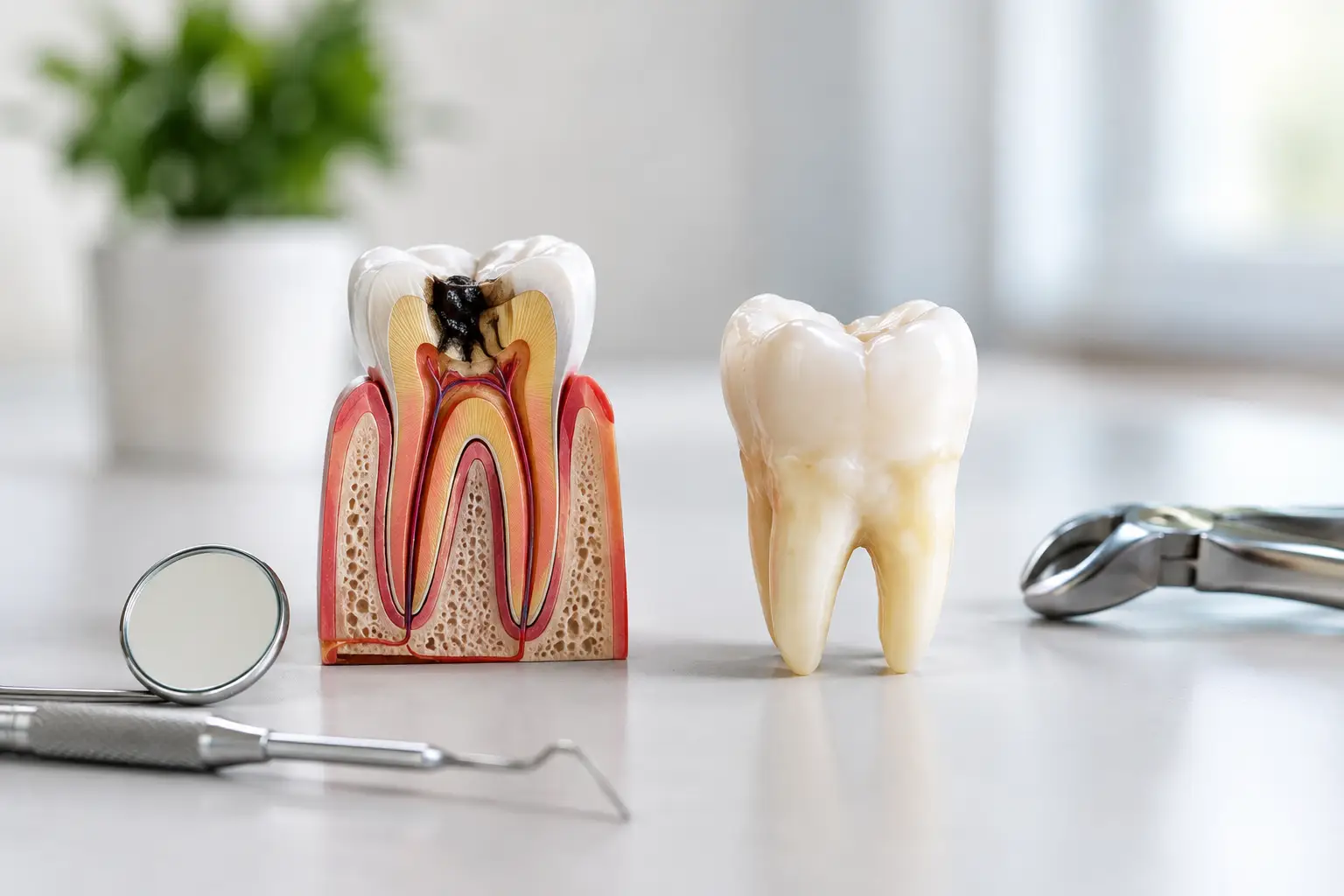

A blood clot forms in the extraction socket soon after a tooth is removed. It may not look like much, but it is the protective layer that allows the area underneath to heal. The key to how to rinse after extraction is protecting that clot, especially during the first day when it is most vulnerable.
Rinsing too soon, swishing forcefully, or spitting with pressure can disturb the clot and lead to more bleeding or a painful complication called dry socket. A gentle approach is safer, and the timing matters as much as the rinse itself.
Do not rinse for the first 24 hours
After an extraction, your dentist will usually ask you not to rinse, spit forcefully, or use a straw for the first 24 hours. These actions create suction or movement in the mouth that can pull the clot out of place.
During this period, focus on following the instructions you were given at your appointment. Bite gently on the gauze for the time advised, rest with your head slightly elevated, and choose cool, soft foods once the numbness has worn off. If saliva collects in your mouth, let it fall out gently rather than spitting.
Some light oozing or a pink tinge in saliva is common during the first day. If bleeding is steady, heavy, or does not improve after biting firmly on clean gauze as directed, contact your dental office for advice.
How to rinse after extraction starting the next day
Once 24 hours have passed, a warm salt-water rinse is often the simplest way to keep the area clean without irritating it. It can help remove food particles, soothe tender tissues, and support a clean healing environment.
Mix about half a teaspoon of table salt into one cup, or 240 mL, of warm water. The water should be comfortably warm, not hot. Hot water can increase discomfort and may encourage bleeding.
Take a small sip and hold it gently over the extraction area. Do not swish vigorously. Instead, tip your head slowly from side to side, allowing the salt water to move around the mouth with minimal effort. After about 20 to 30 seconds, open your mouth over the sink and let the water drain out. Avoid forceful spitting.
Most patients can do this after meals and before bed, usually three to four times a day. Your dentist may provide different instructions based on the type of extraction, whether stitches were placed, or your individual health needs. Those instructions should always come first.
Why gentle rinsing matters
The goal is not to flush the socket aggressively. The clot needs time to turn into new healing tissue. Strong swishing can loosen it, while forceful spitting can create enough pressure to cause the same problem.
A gentle rinse cleans the surrounding mouth while respecting the healing site. You do not need to poke at the socket, pull food out with your fingers, or try to make it look completely empty. Healing sockets commonly appear dark red, brown, cream-coloured, or covered by a light film as tissue develops. Appearance alone does not always signal a problem.
What to avoid while the socket heals
For at least the first several days, avoid mouthwashes containing alcohol unless your dentist specifically recommends one. Alcohol can sting and may irritate healing tissues. Hydrogen peroxide rinses should also not be used unless they have been prescribed or specifically advised.
Smoking, vaping, and drinking through straws can create suction that raises the risk of dry socket. Tobacco and nicotine also slow healing by reducing blood flow to the tissues. Avoiding them for as long as possible after an extraction is one of the most helpful choices you can make.
Be cautious with foods as well. Crunchy foods, seeds, nuts, popcorn, and small grains can become trapped near the socket. Softer choices such as yogurt, scrambled eggs, soup that is not hot, mashed vegetables, oatmeal, and smoothies eaten with a spoon are often more comfortable at first.
Brushing still matters after an extraction. Continue brushing and flossing the rest of your mouth, but stay away from the socket with your toothbrush for the first day. After that, brush nearby teeth carefully without scrubbing the extraction site. A clean mouth supports healing, but being too aggressive can set healing back.
If you had a wisdom tooth extraction
Wisdom tooth sockets are often farther back in the mouth and may collect food more easily. Your dentist may recommend salt-water rinses after the first day and, in some cases, provide a curved irrigation syringe to use later in recovery.
Do not use an irrigation syringe before the time your dentist recommends. For many patients, that is not until several days after surgery, when the early clot is more stable. Using it too early or with too much pressure can disturb healing tissue.
Swelling, jaw stiffness, and mild bruising can be more noticeable after wisdom tooth removal than after a straightforward extraction. These symptoms should gradually improve. If pain or swelling becomes worse after initially improving, it is worth calling your dental clinic.
When rinsing discomfort is normal and when to call
A mild sting from salt water can happen, particularly if the gums are sore or there are small irritated areas nearby. Try making sure the water is warm rather than hot and that the salt is fully dissolved. If salt-water rinses cause significant burning or pain, stop and ask your dentist what to use instead.
Call your dentist promptly if you develop severe or increasing pain a few days after the extraction, pain that spreads toward the ear or jaw, a bad taste or odour that does not go away, fever, facial swelling that is getting worse, or persistent heavy bleeding. These may be signs that you need an assessment.
Dry socket is not simply normal post-extraction soreness. It often causes intense, throbbing pain two to five days after a tooth is removed, sometimes with an unpleasant taste or smell. It is treatable, but it requires professional care. Do not try to pack the socket with home remedies.
Difficulty breathing or swallowing, rapidly spreading swelling, or uncontrolled bleeding needs urgent medical attention. If you are unsure whether a symptom can wait, calling your dental office is the right first step.
A practical routine for the days ahead
For the first 24 hours, leave the area alone as much as possible. Beginning the next day, use gentle warm salt-water rinses after eating and before bed, let the liquid fall out rather than spitting, and brush the rest of your teeth carefully. As tenderness settles, return gradually to your usual foods and oral hygiene routine.
Healing times vary. A simple extraction may feel much better within several days, while a surgical or wisdom tooth extraction can take longer. The socket itself continues filling in over the following weeks, even after you feel back to normal.
If you have questions about your own recovery, DentiFlow Dentistry can help you understand the instructions for your procedure and assess symptoms that do not feel right. A quick call can provide reassurance or help you get timely care when it is needed.