Swelling, tenderness, or a small pimple on the gums near a tooth may indicate an underlying infection.

At DentiFlow Dentistry in Thornhill, we offer expert root canal treatment to eliminate infection, relieve pain, and preserve your natural tooth. If you’re experiencing severe toothache, swelling, or sensitivity to hot and cold, you may have an infected tooth that requires immediate care. Our modern techniques ensure the process is comfortable, efficient, and often no more uncomfortable than getting a regular filling.




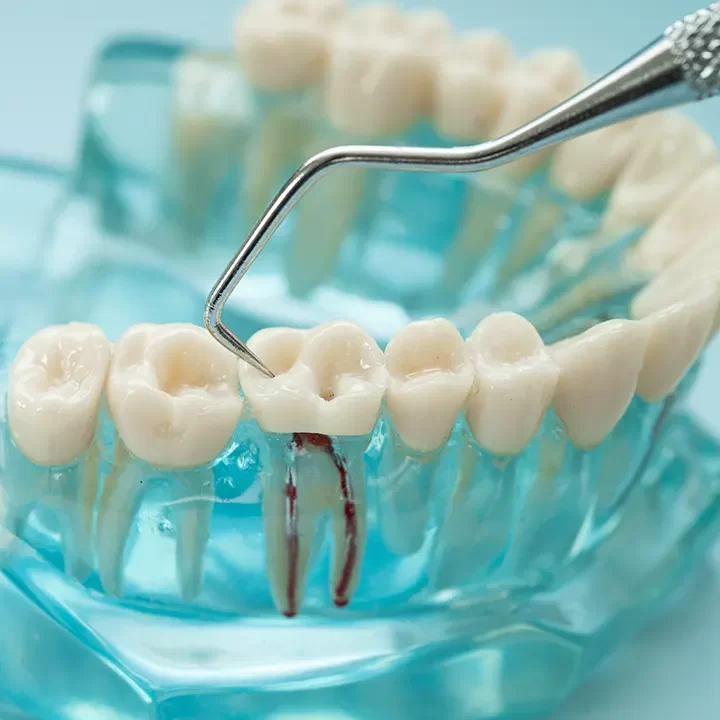
A root canal is a restorative dental procedure that removes infected or damaged pulp from inside a tooth. Once the pulp is removed, the root canals are cleaned, disinfected, and sealed to prevent further infection. The goal is to save the natural tooth and avoid the need for extraction. After the procedure, a crown is usually placed to restore full function and appearance.
With a crown, the treated tooth looks and functions just like your natural teeth.
Cleaning and sealing the canals stops the spread of infection to surrounding teeth and bone.
The procedure allows you to keep your natural tooth, avoiding the need for extraction or replacement.
Here’s what you can expect during your root canal treatment at DentiFlow:
We assess the affected tooth, confirm the infection, and plan your treatment with precision imaging.
The area is numbed to ensure you feel completely comfortable throughout the procedure.
The infected pulp is removed, and the canals are cleaned, shaped, and disinfected.
The canals are sealed with a biocompatible material, and a custom crown is placed for long-term protection and function.
Persistent or throbbing toothaches are a common sign of deep infection requiring a root canal.
Swelling, tenderness, or a small pimple on the gums near a tooth may indicate an underlying infection.
If your tooth remains sensitive after exposure to temperature, it may mean the nerve is inflamed or infected.
If a tooth has been severely damaged by decay or injury, a root canal may be necessary to save it.
After your root canal:
Avoid chewing on the treated tooth until your final crown is placed.
Take prescribed medications or over-the-counter pain relievers as recommended.
Brush and floss gently to maintain oral hygiene.
Attend your follow-up visit for crown placement and evaluation.
Contact us if you experience swelling or pain that worsens over time.

Most root canal treatments are covered under standard dental insurance plans. At DentiFlow, we help you verify your benefits, submit claims, and understand your coverage. If you are not insured, we offer flexible financing options and support patients under the Canadian Dental Care Plan (CDCP) where applicable. Final pricing will depend on the tooth and complexity of your case, which we’ll discuss in detail during your visit.
Our experienced dentists and dental hygienists are committed to your comfort and long-term oral health.
From children to seniors, we provide complete dental care in one convenient Thornhill location.
We offer evening and weekend appointments, direct insurance billing, and personalized treatment planning.
At DentiFlow Dentistry, root canal procedures are performed with expert care and advanced precision. Dr. Shamin Makvandi and Dr. Sandy Dief use modern techniques to ensure a pain-free experience and successful outcomes. For more complex cases or surgical needs, Dr. Hamed Nemati Rezvani offers advanced endodontic and restorative support.

No. With modern anesthesia and technology, most patients find the procedure no more uncomfortable than a filling.
Most root canals can be completed in 1–2 visits, depending on the severity of the infection.
Yes. A crown strengthens and protects the tooth after treatment, especially for molars.
If left untreated, the infection can spread, leading to abscesses, bone loss, or tooth extraction.