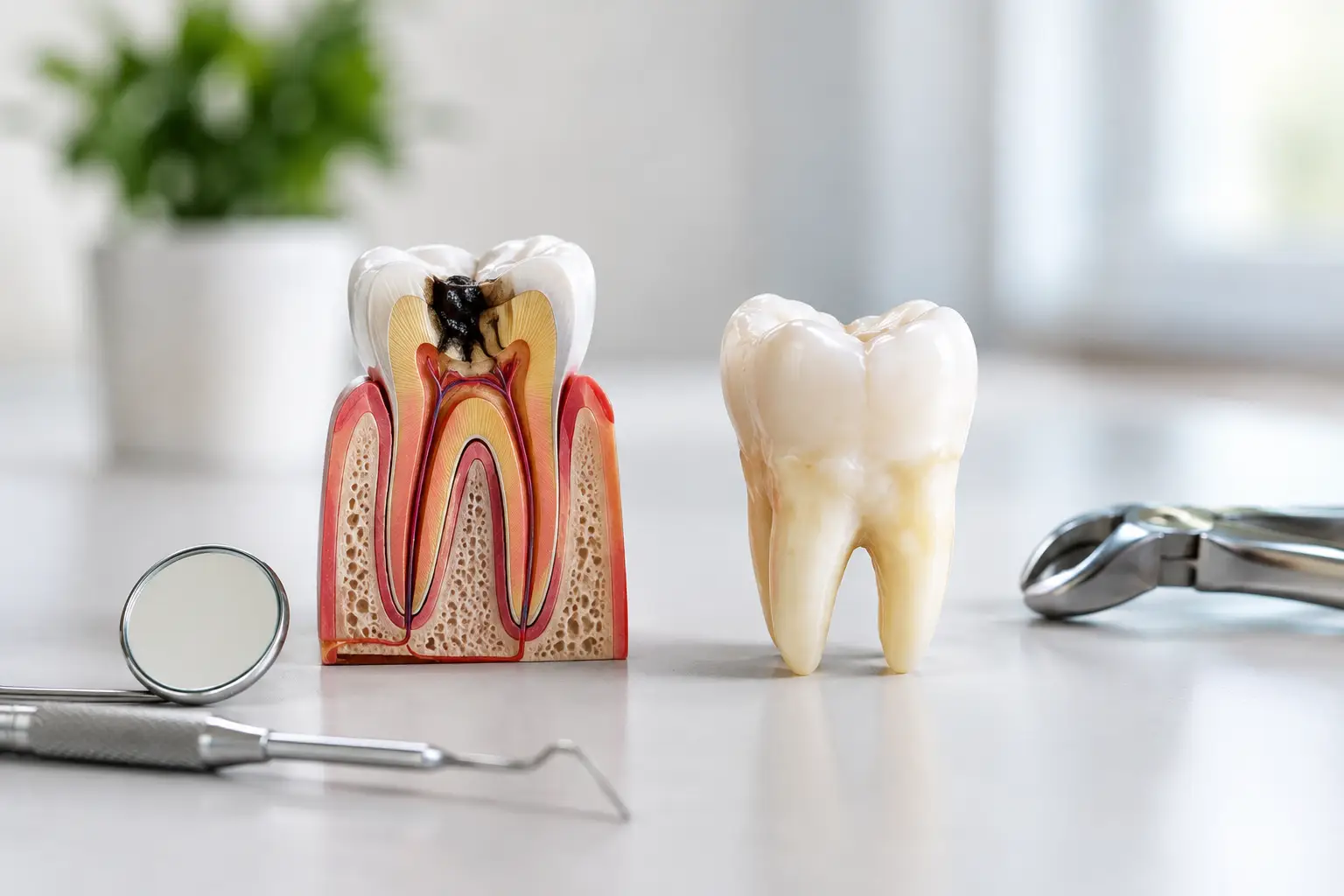
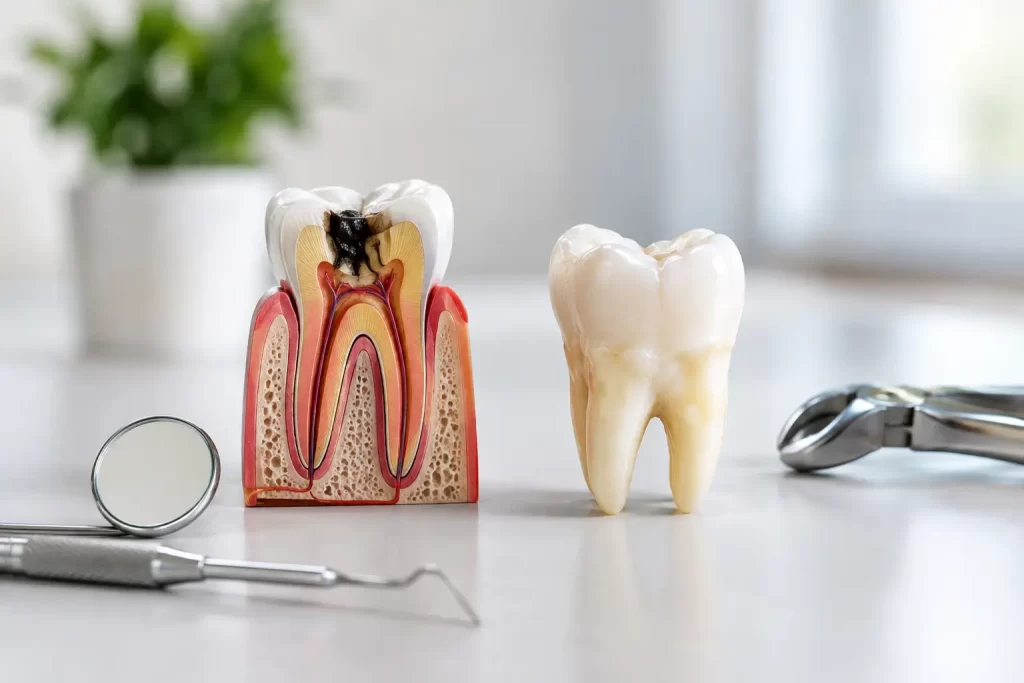
A severe toothache can make every decision feel urgent, especially when you hear the words “root canal” or “extraction.” With root canal versus extraction, the right choice is not simply about which treatment is quicker. It depends on whether the tooth can be predictably saved, how infection has affected it, and what will best support your comfort, bite, and long-term oral health.
A dental examination and X-rays provide the information needed to make that decision. If you have swelling, persistent pain, a cracked tooth, or sensitivity that does not settle, seeking care promptly can often expand your treatment options.
Root Canal Versus Extraction: The Main Difference
Root canal therapy is designed to save a natural tooth when the soft tissue inside it, called the pulp, is inflamed or infected. During treatment, the dentist removes the damaged pulp, carefully cleans the inside of the tooth, and seals it. In many cases, the tooth is then protected with a crown because a tooth that has had root canal treatment may be more vulnerable to fracture.
An extraction removes the entire tooth from the mouth. It may be recommended when the tooth cannot be restored safely or reliably, such as when decay extends too far below the gumline, the root is severely fractured, or advanced gum disease has left the tooth without enough supporting bone.
Both treatments can relieve pain and address infection. The key difference is that a root canal aims to preserve your natural tooth, while an extraction creates a space that may need to be replaced to prevent future changes in your bite.
When a Root Canal May Be Recommended
Root canal therapy is commonly considered when there is enough healthy tooth structure and root support to restore the tooth after treatment. Deep decay, a large old filling, repeated dental work, injury, or a crack can allow bacteria to reach the pulp. Once this happens, the tooth may ache on its own, hurt when biting, react strongly to hot or cold temperatures, or develop swelling near the gum.
Saving a natural tooth has practical benefits. Your tooth already fits your bite, helps maintain normal chewing, and supports the surrounding bone and teeth. A successful root canal followed by an appropriate restoration can allow many patients to keep that tooth for years.
That said, root canal treatment is not always the best option. A tooth with a vertical root fracture, very limited remaining tooth structure, or severe periodontal disease may have a poor long-term outlook even if the infection can be treated. Your dentist should explain not only whether the root canal can be completed, but whether the tooth can be restored and maintained comfortably afterward.
What treatment feels like
Many patients worry that root canal therapy will be painful. The procedure is performed using local anesthetic, much like a filling, so the goal is to keep you comfortable throughout the visit. In fact, treatment often brings relief because it removes inflamed or infected tissue that is causing pain.
Some tenderness afterward is normal, particularly when the tooth was painful before treatment. This usually improves over the following days. Following aftercare instructions and returning for your final restoration are important parts of protecting the treated tooth.
When Extraction Is the Better Choice
Extraction can be the healthiest and most predictable option when a tooth is too damaged to save. This is not a failure. Removing a tooth that has a poor prognosis can prevent repeated procedures, ongoing discomfort, and infection from progressing.
A dentist may recommend extraction when decay has destroyed too much of the tooth, a crack extends deep into the root, or significant bone loss has made the tooth unstable. Extraction may also be appropriate for certain impacted wisdom teeth, teeth that are blocking orthodontic treatment, or teeth that cannot be restored after trauma.
The procedure is completed with local anesthetic. Some extractions are straightforward, while others require a surgical approach, particularly if a tooth is broken at the gumline or impacted. Your dentist will review what is involved, what to expect during healing, and how to care for the area afterward.
After an extraction, the empty space matters. Nearby teeth can gradually shift or tip into the gap, and the opposing tooth may move out of position over time. Missing teeth can also affect chewing and, in some cases, speech or facial support. These changes are not identical for every patient, but they are worth discussing before deciding not to replace a tooth.
Replacing a Tooth After Extraction
If extraction is necessary, replacement options may include a dental implant, bridge, or removable denture. The most suitable option depends on the location of the missing tooth, the health of the surrounding teeth and gums, bone levels, your preferences, and budget.
A dental implant replaces the tooth root with a small post placed in the jawbone, followed by a crown once healing is complete. It can provide a stable, natural-feeling result without using the neighbouring teeth for support. However, it involves a surgical process and requires adequate bone and good oral health.
A bridge can replace a missing tooth by attaching an artificial tooth to crowns on the teeth beside the space. It is often a good option when adjacent teeth already need crowns. A removable partial denture may be suitable when several teeth are missing or when a non-surgical approach is preferred.
Replacement treatment adds time and cost after an extraction, which is why the initial comparison should look beyond the day of the procedure. The lowest immediate cost is not always the lowest long-term cost, especially if untreated gaps lead to additional dental concerns.
How to Compare the Long-Term Trade-Offs
There is no universal answer to root canal versus extraction. A well-restored natural tooth is often worth preserving, but only when its long-term prognosis is favourable. Choosing a root canal for a tooth that is likely to fail soon may lead to further treatment and frustration. On the other hand, extracting a tooth that could have been saved can mean committing to replacement care that might otherwise have been avoided.
A helpful conversation with your dentist should cover the tooth’s prognosis, the treatment sequence, expected maintenance, and alternatives. Ask whether a crown is needed after root canal therapy, whether the tooth has a crack, and what could happen if you delay care. If extraction is recommended, ask what replacement choices suit your bite and whether replacement should happen soon after healing.
Costs also vary. The total for root canal treatment may include the procedure, any necessary buildup, and a crown. Extraction costs vary based on the complexity of removal, while implants, bridges, and dentures each have their own treatment stages and fees. Direct insurance billing and coverage through programs such as the Canadian Dental Care Plan may help eligible patients manage certain dental expenses, but coverage and limits should be confirmed before treatment.
Do Not Wait for Dental Pain to Worsen
Dental infections do not reliably resolve on their own. Pain may temporarily fade if the nerve inside a tooth stops responding, but bacteria can remain and infection can continue around the root. Contact a dentist promptly for facial swelling, fever, trouble swallowing, difficulty breathing, a bad taste with swelling, or severe pain that disrupts sleep. Difficulty breathing or swallowing requires urgent medical attention.
For less severe but ongoing symptoms, arranging an examination early may make treatment simpler. Avoid placing aspirin directly on the tooth or gums, as it can burn soft tissue. Over-the-counter pain medication may help some patients when used as directed, but it does not treat the source of infection.
At DentiFlow Dentistry, patients can receive an assessment, urgent care when needed, and support planning the next step, whether that means restoring a tooth or replacing one that cannot be saved. The most helpful decision is the one based on a clear diagnosis and a plan you can maintain with confidence.