A dental implant cannot get a cavity, but the gum and bone around it can still become infected. That is why learning how to clean dental implants is one of the most practical ways to protect the time, comfort, and investment involved in restoring your smile. A consistent home routine, paired with regular professional maintenance, helps keep the tissues around your implant healthy.
Why dental implant cleaning needs special attention
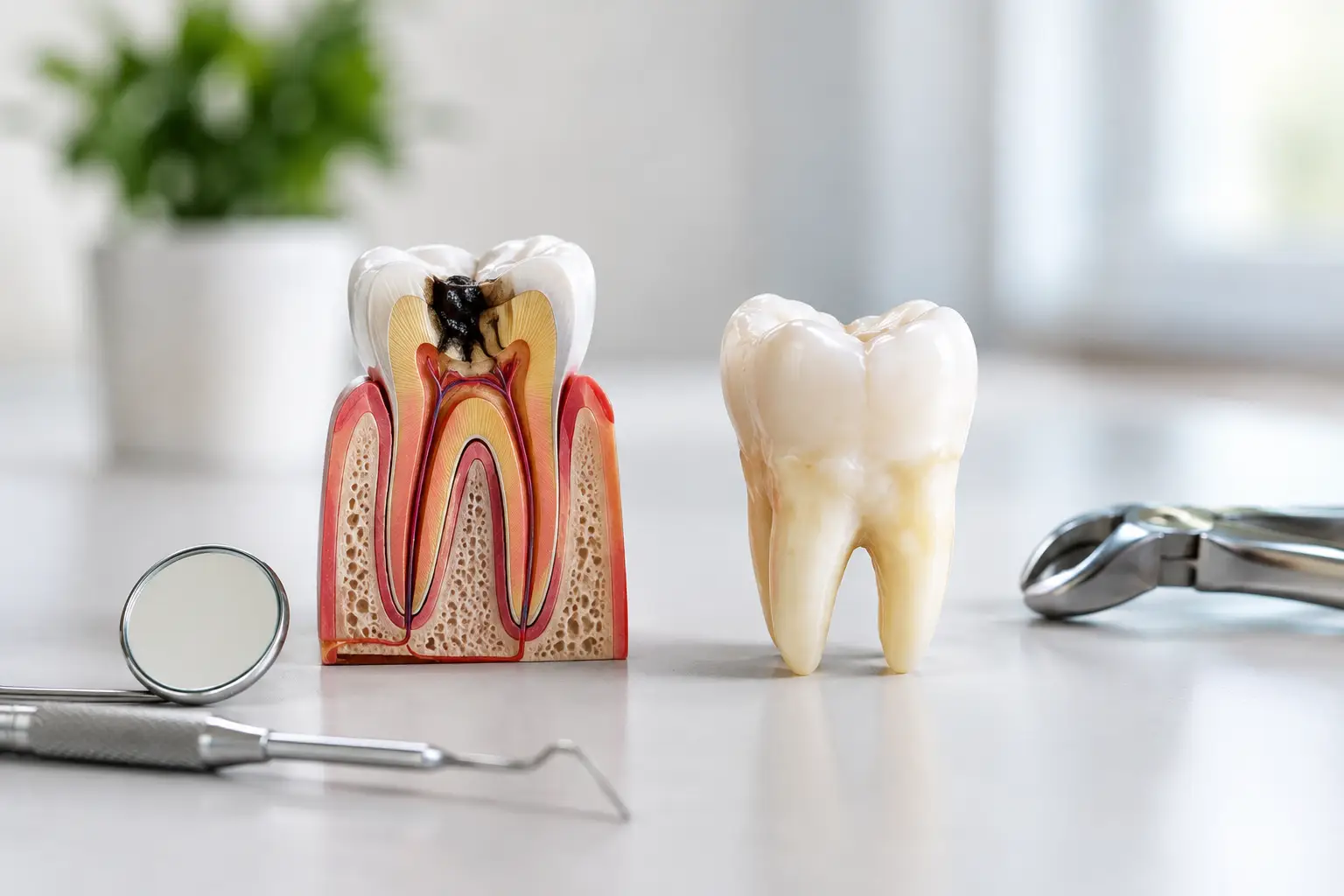
A completed implant usually has three parts: the implant post beneath the gumline, the connector that joins it to the restoration, and the visible crown, bridge, or denture. The crown itself is made from materials that do not decay like natural tooth enamel. However, plaque can still collect where the restoration meets the gumline and between neighbouring teeth.
If plaque is not removed, the gums around an implant may become red, sore, or prone to bleeding. This early inflammation is often called peri-implant mucositis. When it progresses deeper and affects the supporting bone, it is known as peri-implantitis. Not every bit of tenderness means there is a serious problem, but bleeding, swelling, or a bad taste should never be ignored.
The right cleaning method depends on your restoration. A single implant crown is cleaned somewhat like a natural tooth. An implant-supported bridge or removable implant denture has additional areas underneath or around attachments that need attention. Your dentist or hygienist can show you the approach that fits your specific restoration.
How to clean dental implants every day
Good implant care is thorough but gentle. Scrubbing hard is not necessary and may irritate your gums. Aim to remove plaque along the gumline and in the spaces your toothbrush cannot reach.
Brush twice daily with a soft brush
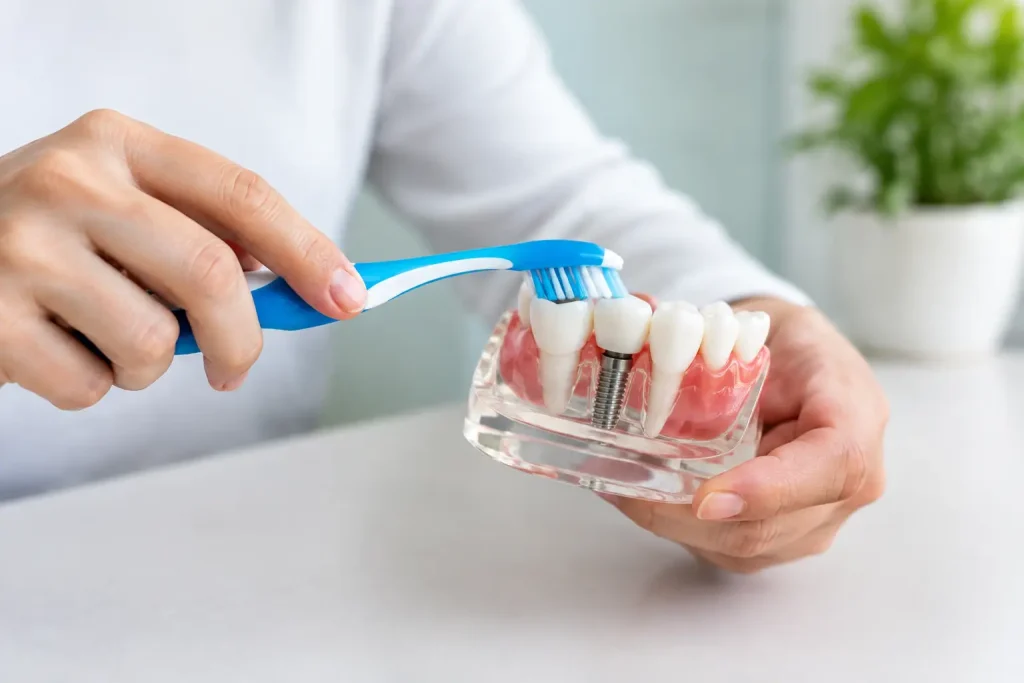
Use a soft-bristled manual or electric toothbrush for two minutes, morning and night. Angle the bristles gently toward the gumline and use small, controlled motions around the implant crown. Clean the cheek side, tongue side, and biting surface, just as you would with a natural tooth.
A non-abrasive fluoride toothpaste is usually a sensible choice for patients with both natural teeth and implants. Fluoride does not harm the implant, and it continues to help protect your remaining teeth from decay. Avoid highly abrasive whitening powders or gritty toothpastes unless your dental team has recommended one. They can scratch or dull certain restoration surfaces over time.
Clean between the teeth once a day
Interdental cleaning is where many implant routines fall short. A toothbrush cannot reliably clean the tight areas beside an implant crown or under a bridge. The best tool depends on the space, the shape of your gums, and the type of restoration you have.
For a single implant, floss may be appropriate if it passes comfortably between the teeth. Use it gently against the side of the implant crown and the neighbouring tooth rather than snapping it into the gums. Some people find implant-safe tape floss easier to handle than thin string floss.
Interdental brushes can be very effective when there is enough room between teeth. Choose a size that fits with light resistance, not force. Many patients benefit from plastic-coated or non-metal-core brushes near implant restorations, particularly if the brush will touch a metal surface. Your hygienist can recommend the correct diameter, because a brush that is too small will not clean well and one that is too large can traumatize the gum tissue.
A water flosser can be a helpful addition, especially for people with bridges, limited hand mobility, or tight spaces that are difficult to reach. It should support, rather than replace, brushing and any cleaning method your dentist has advised. Use a comfortable pressure setting and direct the stream along the gumline, not aggressively into it.
Clean under implant bridges carefully
A fixed implant bridge may have a small space between the restoration and your gums. Food debris and plaque can collect there even when the bridge looks clean from the outside. A floss threader, bridge floss, or an appropriate interdental brush can help clean beneath it.
Guide the cleaning aid under the bridge without forcing it. Move it back and forth gently along the underside and around each supporting implant, then remove it and repeat as needed. If floss continually shreds, catches, or will not pass through a space that was previously accessible, arrange a dental visit. The restoration, gum tissue, or a nearby tooth may need to be assessed.
Remove and clean implant-supported dentures as instructed
If you wear a removable denture that clips onto implants, take it out daily unless your dentist has given you different instructions. Brush the denture with a denture brush and a cleaner designed for removable appliances, then clean around the implant attachments in your mouth with a soft toothbrush.
The attachments may need periodic maintenance because they can wear with use. Do not try to adjust or tighten them yourself. If the denture feels loose, rocks, becomes difficult to remove, or no longer clicks into place properly, book an appointment.
Tools and habits to avoid
The goal is to clean effectively without damaging the restoration or irritating the tissue around it. Avoid using sharp metal picks, toothpicks that splinter, or household tools to remove trapped food. These can injure your gums or scratch the restoration.
Be cautious with very stiff brushes and aggressive scrubbing. Smoking or vaping can also make healing and gum health more difficult, particularly after implant placement. If you clench or grind your teeth, wearing a dentist-provided night guard may help protect both your implant restoration and your natural teeth from excess force.
Mouthwash may be useful for some patients, but it is not a substitute for mechanical plaque removal. Alcohol-free options are often more comfortable for dry-mouth patients. If you have been prescribed a medicated rinse after surgery or gum treatment, use it exactly as directed, since these products are generally intended for a specific period rather than long-term daily use.
Signs your implant needs professional attention
Healthy gums around an implant should generally feel comfortable and look pink, although individual gum colour varies. Contact a dental office promptly if you notice bleeding when brushing, persistent swelling, pus, worsening bad breath, a recurring unpleasant taste, pain when biting, or a sensation that the crown or bridge is moving.
A loose crown is different from a loose implant, but both need timely assessment. Do not wait for pain. Implant complications can be subtle in their early stages, and prompt care may help prevent a more complex problem.
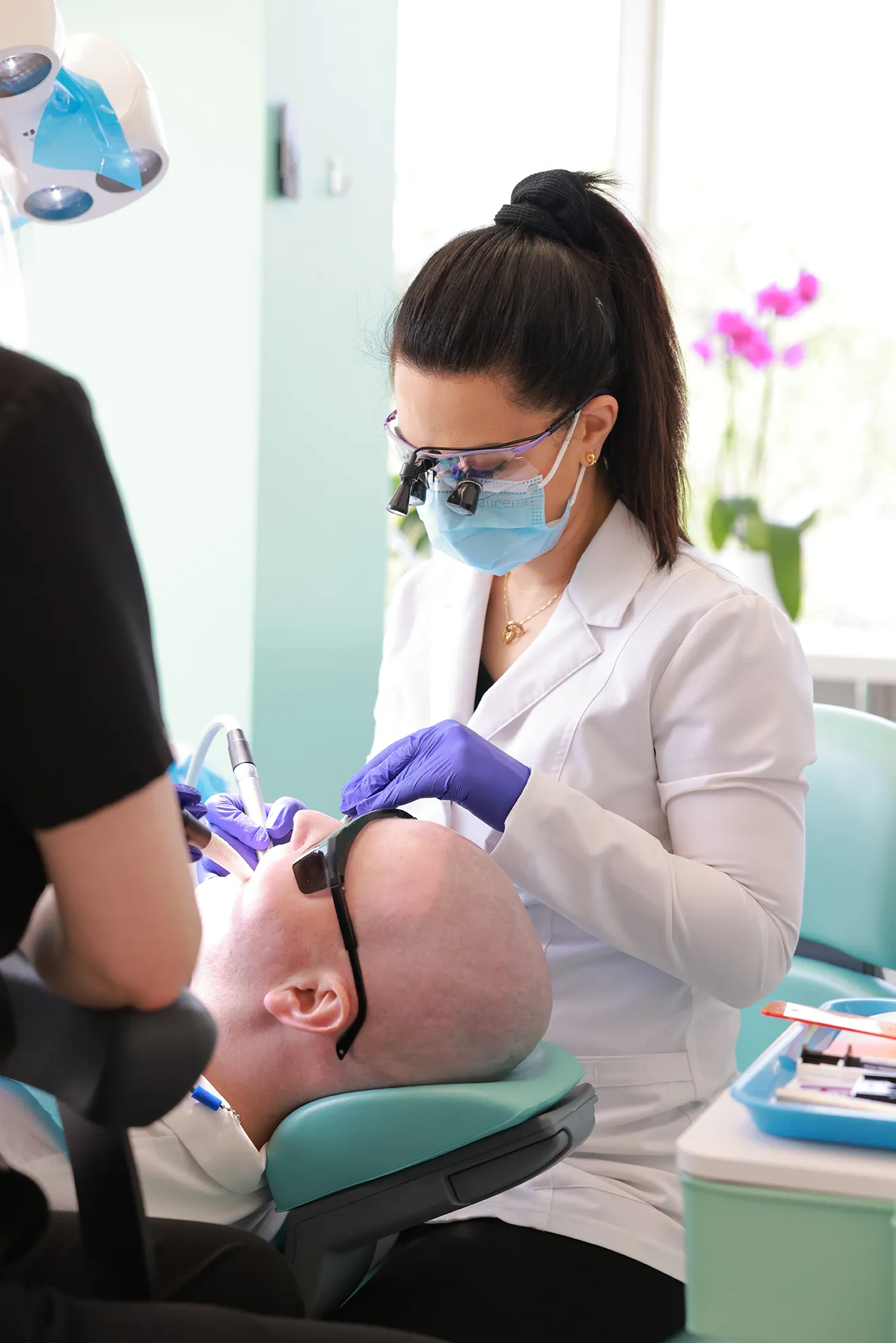
Regular checkups and hygiene appointments remain essential after implant treatment. Your dental team can examine the gum tissue, check your bite, assess the restoration, and use instruments suited to implant surfaces. The recommended recall schedule varies. People with a history of gum disease, diabetes, smoking, reduced dexterity, or multiple implants may benefit from more frequent maintenance.
Common questions about cleaning implants
Can I use an electric toothbrush on dental implants?
Yes, in most cases. A soft brush head and gentle pressure are key. An electric toothbrush with a pressure sensor can be useful if you tend to brush too firmly. Follow the brushing technique recommended by your dentist or hygienist after your implant has healed.
Should dental implants bleed when I brush them?
No. Bleeding is often a sign of gum inflammation or plaque buildup, even if it stops quickly. Improve your cleaning gently but thoroughly, and arrange an examination if bleeding continues for more than a few days.
Can I whiten an implant crown?
Whitening products do not change the colour of an implant crown, bridge, or denture tooth. They may lighten nearby natural teeth, which can create a colour difference. Speak with your dentist before whitening so you can plan for an even-looking result.
A few careful minutes each day can make a meaningful difference to the long-term health of your implant. If you are unsure which brush, floss, or interdental cleaner suits your restoration, DentiFlow Dentistry can provide practical, personalized guidance during your next visit.