A missing tooth can affect more than the way a smile looks. It can make chewing less comfortable, allow nearby teeth to shift, and gradually change how your bite feels. When comparing bridge versus implant costs, the lowest initial fee is only one part of the decision. The right choice also depends on the health of neighbouring teeth, the condition of your jawbone, your timeline, and how you want to care for the restoration over time.
For patients in Thornhill and the surrounding GTA, a dental bridge and a dental implant can both be reliable ways to replace a missing tooth. An examination and personalized treatment plan are the best way to understand which option suits your needs and what your own costs may be.
Bridge versus implant costs: the starting point
In Ontario, a conventional three-unit dental bridge commonly costs several thousand dollars. A typical range may be approximately $3,000 to $6,000 or more, depending on the materials used, the teeth involved, and the complexity of the preparation. A bridge uses crowns on the teeth beside the gap to support an artificial tooth in the middle.
A single dental implant with its final crown often has a higher starting cost, frequently ranging from roughly $3,500 to $6,500 or more. This estimate can include the implant post, the connecting abutment, and the crown, but every treatment plan is different. If bone grafting, a sinus lift, tooth extraction, or temporary tooth replacement is needed, those services add to the total.
These figures are general planning ranges, not a quote. Dental fees vary by the specific clinical work required, the laboratory materials selected, and whether related treatment is necessary before the final restoration can be placed.
Why two similar-looking results can cost differently
A bridge and an implant may both fill a space in your smile, but they work in different ways. That difference explains much of the cost.
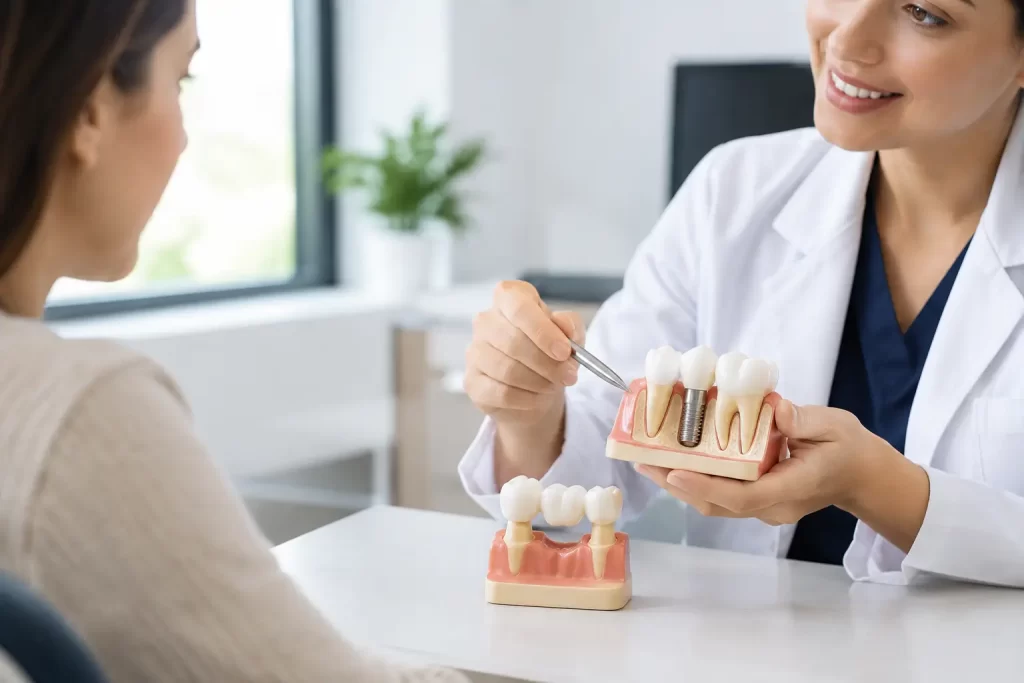
A bridge is supported by natural teeth. If the adjacent teeth already have large fillings, old crowns, cracks, or damage, placing crowns on them as part of a bridge may be a practical way to restore and protect those teeth at the same time. The cost reflects preparing the supporting teeth, creating the bridge, and fitting it precisely so your bite feels natural.
An implant replaces the tooth root below the gumline. It is surgically placed in the jawbone, then allowed time to heal before a crown is attached in many cases. The longer process, surgical component, imaging, and precision-made parts can increase the upfront investment. However, an implant does not require the dentist to reshape healthy teeth beside the gap.
The materials also matter. A bridge or crown may be made from porcelain, ceramic, zirconia, metal-supported ceramic, or another suitable material. The location of the tooth, appearance goals, strength requirements, and bite pressure all influence the recommendation.
Treatment needed before replacement
The condition of the mouth at the time of treatment can have a meaningful effect on cost. A tooth that has not yet been removed may need an extraction. Gum inflammation or periodontal disease may need to be controlled first. For implants, reduced bone volume can require grafting so the implant has stable support.
This preparatory care is not an unnecessary add-on. It helps create a healthier foundation for the restoration and can protect the long-term result. A clear treatment plan should separate these steps so you understand what is essential now, what may be recommended later, and why.
The cost of time and convenience
A bridge can often be completed over a shorter period, sometimes in a few appointments once the supporting teeth are ready. That can be appealing if you want to restore appearance and chewing function promptly.
Implant treatment usually takes longer because healing is part of the process. Some patients receive a temporary replacement during this period, while others may not need one depending on the location of the missing tooth and their smile. For a front tooth, a temporary option may be especially important cosmetically. The appropriate timeline depends on healing, bone quality, and the treatment approach recommended by your dentist.
Looking beyond the initial fee
The more useful comparison is not simply which treatment costs less today. It is which treatment makes the most sense for your oral health and expected future care.
A well-made bridge can provide many years of service with consistent brushing, flossing, professional hygiene appointments, and regular examinations. It does need special cleaning under the replacement tooth, often with floss threaders or an interdental brush. Because the supporting teeth are connected, a problem with one supporting tooth can affect the bridge as a whole.
An implant crown is cleaned much like a natural tooth, although it still requires careful home care and routine professional monitoring. The implant itself cannot decay, but gum tissue and bone around it can become inflamed if plaque is allowed to build up. Implant maintenance is a lifelong commitment, not a one-time procedure.
Neither option is automatically better for every person. A bridge may be the more conservative financial choice when neighbouring teeth already need crowns, when surgery is not suitable, or when a faster solution is a priority. An implant may offer stronger long-term value when the teeth beside the gap are healthy and preserving them is a key goal.
Insurance and CDCP considerations
Insurance coverage can change the amount you pay personally, but plans differ considerably. Some workplace plans provide partial coverage for bridges and crowns based on a fee guide and annual maximum. Implant surgery or implant components may have limited coverage or may not be covered at all, even when the implant crown receives some benefit. Pre-authorization can help clarify what your plan will contribute before treatment begins.
The Canadian Dental Care Plan may help eligible patients access certain oral health services, subject to program rules, coverage criteria, co-payments, and provider participation. Coverage is not the same for every treatment or every patient. If you are considering a bridge or implant, ask for help reviewing the current benefit information and your expected out-of-pocket amount.
At DentiFlow Dentistry, direct insurance billing can reduce paperwork for eligible plans. It is still helpful to remember that insurance is a benefit, not a clinical recommendation. The treatment choice should begin with what protects your oral health and function, then account for your available coverage and budget.
Questions worth asking at your consultation
A treatment discussion should leave you with a clear picture, not pressure to decide quickly. Ask whether the teeth beside the gap are healthy, whether you have enough bone for an implant, and whether either choice could affect future treatment needs. It is also reasonable to ask what is included in the quoted fee, whether temporary teeth are required, and what maintenance each option will involve.
If the cost feels difficult to manage, ask whether treatment can be staged safely. In some situations, addressing infection, extracting a painful tooth, or placing a temporary solution may come first while you plan the permanent restoration. The safest sequence depends on your dental condition, so it should be determined after an examination.
Choose the option that supports your next decade of care
Replacing a missing tooth is a health decision as well as a financial one. A bridge may restore your smile efficiently and predictably. An implant may preserve adjacent teeth and provide a more independent replacement, provided your health, bone, and timeline support it.
The most helpful next step is a personal assessment that considers your bite, gums, neighbouring teeth, imaging, insurance details, and priorities. With a clear explanation of bridge versus implant costs and the care behind each option, you can make a decision that feels practical today and comfortable for the years ahead.