A loose or missing denture can affect far more than meals. It can change how comfortably you speak, what foods you avoid, and whether you feel confident smiling around family and friends. So, can CDCP cover dentures? In many cases, yes. The Canadian Dental Care Plan includes coverage for certain removable denture services when they are clinically appropriate and you meet the plan’s requirements.
The practical answer is not always as simple as “dentures are free.” Your coverage can depend on the type of denture needed, your oral health, how recently you received similar treatment, whether preauthorization is required, and your household income. A dental assessment is the best place to start, because it identifies the treatment that will support your comfort and long-term oral function.
Can CDCP Cover Dentures for Missing Teeth?
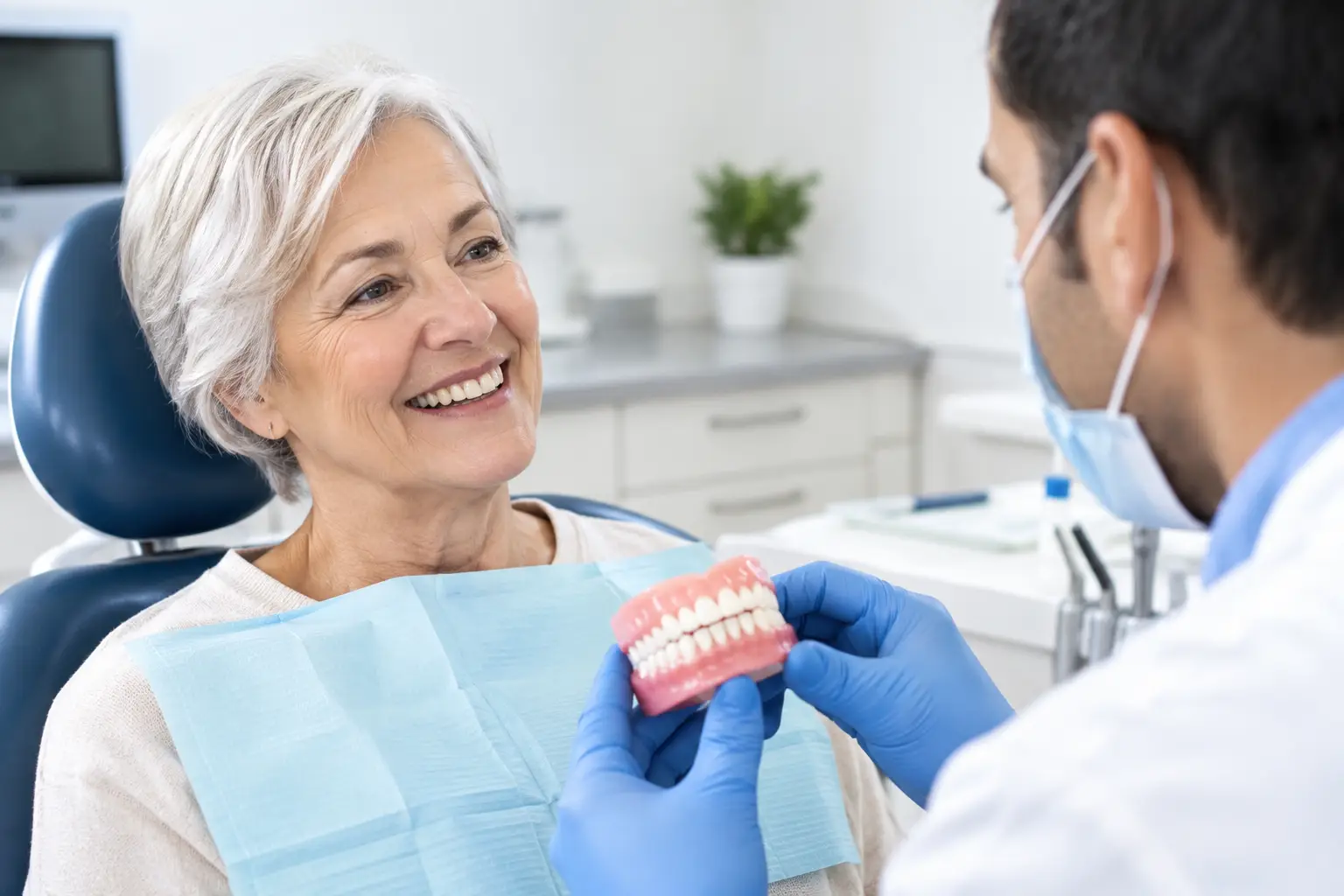
The CDCP can contribute toward complete and partial removable dentures for eligible patients. Complete dentures replace all teeth in an upper or lower arch. Partial dentures replace one or more missing teeth while fitting around the natural teeth that remain.
Dentures are generally considered when missing teeth are affecting chewing, speech, appearance, or the ability to maintain a healthy bite. They may also be recommended after extractions, once the gums and supporting bone are ready. Your dentist will assess whether a denture is the right solution for your individual situation rather than selecting a treatment based on coverage alone.
CDCP coverage is intended to support medically necessary oral health care. That means a standard denture option that restores function may be covered differently from an elective material, cosmetic feature, or treatment upgrade. If there is a cost difference between the plan allowance and your selected treatment, your dental team should explain it before treatment starts.
Why an Exam Comes Before a Denture Claim
A denture needs a stable, healthy foundation. Before creating one, your dentist will examine your teeth, gums, bite, and jawbone. X-rays may be needed to check for infections, retained roots, bone changes, or teeth that could be treated and kept.
This step matters because dentures are not always the immediate answer. A patient with a painful tooth may first need an extraction or root canal treatment. Someone with gum inflammation may need hygiene care before impressions can be taken. In other cases, an existing denture may only need an adjustment, repair, or reline rather than full replacement.
The appointment is also a chance to talk about daily life. If you have trouble eating apples, speaking clearly in meetings, or keeping a lower denture in place, those details help guide the treatment plan. A well-made denture should be planned around your mouth and your needs, not treated as a one-size-fits-all appliance.
What CDCP May Pay and What You May Pay
The CDCP pays according to its own established fees, which may not match the fees charged by every dental office. Depending on your adjusted family net income and the details of your care, you may have a co-payment or an amount that is not covered by the plan.
For patients with an adjusted family net income below $70,000, the CDCP may cover the full eligible amount under the plan. Patients in higher income ranges may have a co-payment. The plan’s income-based co-payment is generally 40 percent for adjusted family net income from $70,000 to less than $80,000, and 60 percent from $80,000 to less than $90,000.
There can also be an additional patient balance if the clinic’s fee is higher than the CDCP fee for an eligible service. This is separate from the income-based co-payment. Before proceeding, ask for a clear estimate that shows the planned services, the expected CDCP contribution, and any amount you may need to pay yourself.
Coverage is also subject to frequency limits. If you received dentures recently, the plan may not cover replacement right away unless its criteria are met. Dentures can last for years, but the mouth changes over time, especially after tooth loss. A clinical assessment and a review of your treatment history will help determine whether replacement, repair, or adjustment is appropriate.
When Preauthorization May Be Needed
Some CDCP denture services may require preauthorization before treatment can begin. Preauthorization is the plan administrator’s review of a proposed treatment to confirm that it meets coverage criteria. It is not a judgment about whether you deserve care. It is an administrative step that may be needed for particular services or more complex treatment plans.
Your dental office can submit the required clinical information, such as examination findings, X-rays, and the proposed treatment. A response may take time, so it is wise not to assume that every service can be completed at the first visit.
If approval is required, your dentist can help you understand the next steps and discuss appropriate alternatives while you wait. For example, an existing denture might be adjusted to improve comfort, or treatment may be staged to address urgent concerns first.
Dentures, Implants, and Other Treatment Choices
Dentures are a reliable way to replace teeth, particularly when many teeth are missing or when a patient wants a removable option. They are often less invasive than implant treatment and can restore the ability to eat and smile more comfortably. Still, they require an adjustment period, regular cleaning, and occasional maintenance as your gums and jawbone change.
Dental implants can help support certain replacement options, but implant treatment is different from conventional removable dentures and may have different CDCP coverage rules. Not every patient is a suitable candidate for implants, and not every treatment is covered to the same degree. Bone volume, gum health, overall health, budget, and personal preferences all matter.
For a patient missing only one or a few teeth, a bridge may be worth discussing. For someone with teeth that can be restored, preserving natural teeth may be the best path. Good dentistry starts with the treatment that supports your health and function, then makes the financial details as clear as possible.
How to Prepare for Your Denture Appointment
Bring your CDCP information and any current insurance details to your visit. If you wear dentures now, bring them too, even if they are cracked, loose, or uncomfortable. They can give your dentist useful information about your bite, prior treatment, and the areas causing trouble.
Be ready to share any medical conditions, medications, dry mouth symptoms, or recent changes in your health. These factors can affect healing, comfort, and denture fit. If you have questions about cost, ask them early. Understanding the estimate before impressions or treatment begin can make decisions feel much less stressful.
At DentiFlow Dentistry, eligible patients can receive a denture assessment and support with CDCP claim administration in a local, full-service setting. The goal is to explain what your mouth needs, what the plan may cover, and what to expect at each stage without making the process feel overwhelming.
Common Questions About CDCP Denture Coverage
Are all dentures covered by the CDCP?
No. The plan may cover eligible complete or partial removable dentures when they meet clinical and plan criteria. Coverage can vary based on the service, treatment history, frequency rules, preauthorization requirements, and your personal co-payment level.
Can I get a new denture if mine is old or broken?
Possibly, but age alone does not guarantee coverage for replacement. Your dentist will assess the denture’s condition and your oral health to determine whether a repair, reline, adjustment, or new denture is the appropriate treatment. The plan’s replacement rules will also apply.
Will I know my cost before treatment begins?
Your dental office can review your CDCP eligibility and provide an estimate based on the proposed care. Although final claim processing determines the exact plan payment, you should receive a clear explanation of expected out-of-pocket costs before moving ahead.
A comfortable, functional denture can make everyday routines feel normal again. If eating, speaking, or smiling has become difficult, arranging an assessment is a practical first step toward a treatment plan that fits both your oral health needs and your CDCP coverage.