
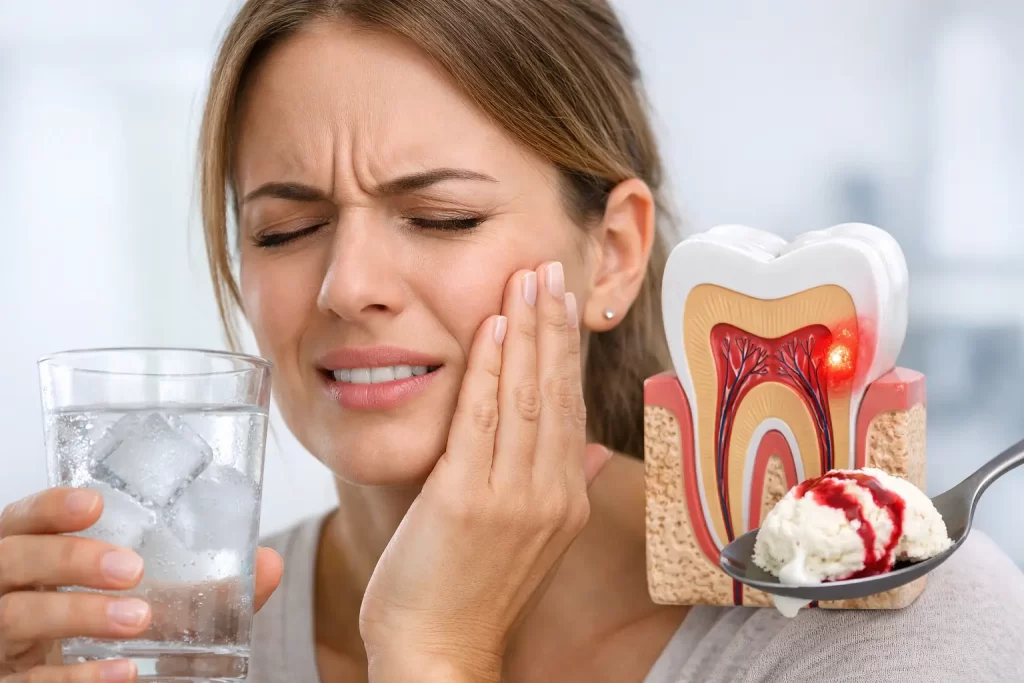
A sip of cold water should not make you brace yourself. If it does, you may be asking what causes tooth sensitivity and whether it is something that can wait until your next cleaning. The answer depends on the pattern of pain. Brief sensitivity can come from common, treatable issues, but a new, worsening, or lingering ache deserves a dental assessment.
Tooth sensitivity usually occurs when the protective outer layers of a tooth no longer fully shield the sensitive inner tissue. Temperature, sweetness, acidity, air, or pressure can then reach tiny channels that lead toward the nerve. The result may be a quick sharp sensation, a dull ache, or pain in one specific tooth.
What Causes Tooth Sensitivity?
The most common reason is exposed dentin. Dentin sits beneath the enamel on the crown of the tooth and beneath the cementum around the root. It contains microscopic tubules that can carry external stimuli toward the tooth’s nerve. Healthy enamel and gum tissue normally protect it. When either is worn away or recedes, sensitivity can follow.
Enamel wear and erosion
Enamel is strong, but it is not indestructible. Frequent exposure to acids can gradually soften and wear it down. This may happen with regular sipping of pop, sports drinks, citrus drinks, or sparkling water, as well as frequent snacking on acidic foods. Reflux and repeated vomiting can also expose teeth to stomach acid.
Brushing immediately after acidic food or drink may add to the problem because enamel is temporarily softened. It is usually better to rinse with water and wait about 30 minutes before brushing. A dentist can help distinguish mild erosion from more significant enamel loss and recommend ways to protect the tooth surface.
Gum recession and periodontal concerns
When gums pull back from the teeth, they expose root surfaces that are less protected than enamel. Recession may be related to gum disease, aggressive brushing, naturally thinner gum tissue, tooth position, or clenching and grinding. It can make cold foods, brushing, and even a breath of winter air uncomfortable.
Bleeding gums, persistent bad breath, swelling, or teeth that appear longer should not be dismissed as ordinary sensitivity. These signs can point to gum inflammation or periodontal disease, which needs professional care to protect both gum tissue and the supporting bone.
Cavities, worn fillings, and leaking restorations
Decay creates an opening in the protective tooth structure. At first, a cavity may only react to sweets or cold drinks. As it progresses, sensitivity can become more frequent, linger longer, or turn into a spontaneous toothache.
An older filling, crown, or bonding can also develop wear at its edges. This does not automatically mean a restoration has failed, but it can allow bacteria or temperature changes to affect the tooth underneath. A dental examination and X-rays, when appropriate, help identify whether a filling can be repaired or should be replaced.
Cracked or fractured teeth
A crack can cause a very particular type of discomfort: pain when biting down or when releasing the bite, sometimes with sensitivity to cold. Cracks may be difficult to see and can result from biting hard foods, an injury, large existing fillings, or long-term grinding.
A cracked tooth is not always an emergency, but it should be assessed promptly. The earlier a crack is found, the better the chance of protecting the tooth with the right treatment. Depending on its depth and location, treatment may range from a new restoration or crown to root canal therapy if the nerve has been affected.
Brushing too hard or using the wrong technique
A firm grip and a hard-bristled toothbrush can feel thorough, but scrubbing back and forth can wear enamel near the gumline and irritate the gums. The damage tends to happen gradually, so patients may not notice it until cold water starts to sting.
Choose a soft-bristled toothbrush and use gentle, small movements along the gumline. Sensitivity toothpaste can be helpful for many people, but it works best when used consistently and alongside changes to the cause of the sensitivity. It cannot repair a cavity, stop gum disease, or seal a cracked tooth.
Teeth grinding and bite pressure
Many people clench or grind without realizing it, especially during sleep or periods of stress. The pressure can wear tooth surfaces, create tiny fractures, loosen restorations, and strain the jaw muscles. Morning jaw soreness, headaches, flattened teeth, or a partner hearing grinding sounds can all be clues.
If grinding is contributing to your sensitivity, a professionally fitted night guard may help protect your teeth. The right option depends on your bite, the amount of wear, and whether you have existing crowns, implants, or other dental work.
Whitening and recent dental treatment
Some people experience temporary sensitivity after professional whitening or using whitening products at home. This often settles, but it should not be severe or prolonged. Whitening should be paused if pain is significant, and a dentist should check whether decay, recession, or a crack is making the tooth more reactive.
It is also common to notice short-term sensitivity after a filling, crown, cleaning, or other dental treatment. The tooth and surrounding tissues can take time to settle. However, pain that gets stronger, lasts more than a few days, wakes you at night, or affects your bite should be reviewed.
The Pattern of Pain Can Offer Clues
Sensitivity is not a diagnosis on its own. Paying attention to when it happens helps your dental team narrow down the cause. Generalized sensitivity across several teeth may be linked to enamel wear, gum recession, or brushing habits. Sensitivity in one tooth can be more suggestive of decay, a crack, a failing restoration, or nerve irritation.
A quick sensation that stops as soon as the cold drink is gone is different from pain that lingers for 30 seconds or longer. Lingering pain after hot or cold temperatures can indicate that the nerve inside the tooth is inflamed. There are exceptions, which is why an examination matters, but the duration and trigger are useful details to share.
Keep track of whether discomfort occurs with cold, heat, sweets, chewing, flossing, or brushing. Also note if the tooth has changed colour, if the gum is swollen, or if there has been a recent fall, sports injury, or hard bite. These observations can make an appointment more efficient and help guide treatment.
What You Can Do Before Your Appointment
Until you are seen, avoid the foods and drinks that reliably trigger discomfort. Use a soft toothbrush, brush gently with fluoride toothpaste, and clean between your teeth carefully. If you use a sensitivity toothpaste, apply it as directed rather than expecting immediate relief after one use.
Try not to test the tooth repeatedly with cold water or hard foods. Avoid placing aspirin directly on a painful tooth or gum, as this can burn soft tissue. If you need pain relief, ask a pharmacist or healthcare professional which over-the-counter option is appropriate for you, particularly if you take other medications or have a medical condition.
Do not assume sensitivity means you need to stop brushing. Plaque buildup can worsen gum inflammation and decay. The goal is gentle, consistent cleaning while arranging care.
When Tooth Sensitivity Needs Urgent Care
Contact a dentist promptly if sensitivity is severe, persistent, or linked to swelling, fever, a bad taste, facial swelling, a broken tooth, or pain when biting. These symptoms may signal an infection, advanced decay, or a fracture that needs timely treatment.
If swelling affects your face, jaw, or neck, or you have trouble breathing or swallowing, seek emergency medical care immediately. Dental infections can spread and should never be managed by waiting for the pain to pass.
For Thornhill families, addressing sensitivity early often means simpler care, whether that is targeted fluoride treatment, a filling, gum care, a protective night guard, or restoration of a damaged tooth. DentiFlow Dentistry can assess the source of the discomfort and explain your options clearly, so you can eat, drink, and smile without anticipating the next sharp twinge.