
A missing front tooth can change much more than a photograph. It may make it harder to bite into food, affect certain sounds when speaking, and leave you feeling self-conscious in everyday conversations. Replacing a missing front tooth is not one-size-fits-all, but timely dental care can protect your smile, comfort, and long-term oral health.
Whether the tooth was lost through an injury, infection, gum disease, or an extraction, your dentist can assess the area and explain the options that suit your needs. The right choice depends on your oral health, timeline, budget, and goals for appearance and function.
Why a Missing Front Tooth Should Be Addressed
Front teeth do important work. They help you bite and guide speech, while also supporting the natural shape of your smile. When one is missing, nearby teeth can gradually shift into the open space. The opposing tooth may begin to move as well, which can affect your bite over time.
The bone around a lost tooth also needs attention. After a tooth is removed or lost, the jawbone in that area no longer receives the stimulation that comes from chewing. Some bone loss can occur over time, particularly if the space remains untreated for years. This does not mean every patient needs the same solution immediately, but it is a good reason to arrange an assessment rather than simply waiting.
If a tooth has been knocked out, treat it as a dental emergency. When possible, hold the tooth by the crown, not the root, gently rinse away visible debris, and place it back in the socket if you can do so safely. If not, keep it in milk or saliva and seek urgent dental care right away. Fast action may make replanting possible.
Options for Replacing a Missing Front Tooth
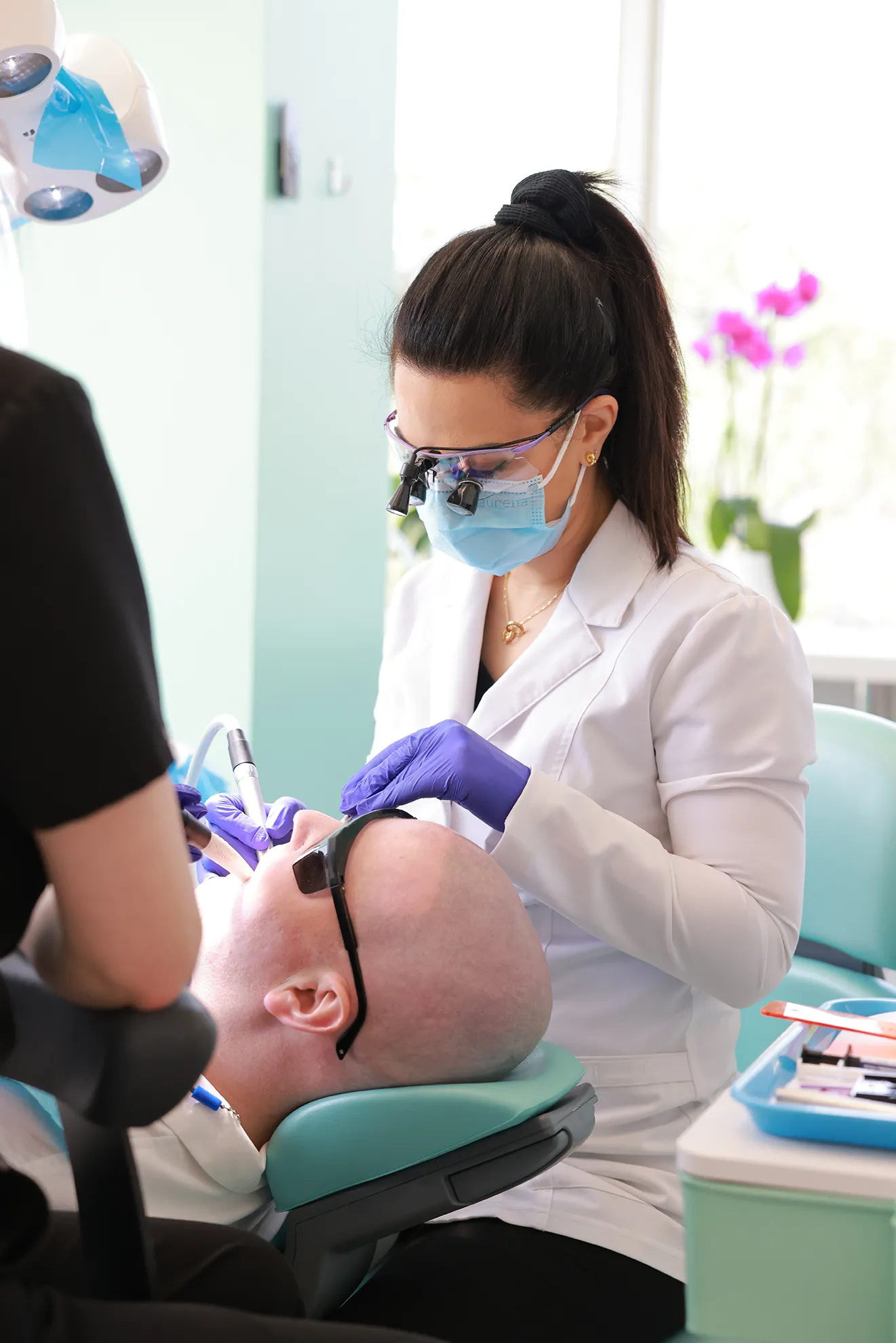
A dentist will first check the health of your gums, neighbouring teeth, bite, and jawbone. X-rays or digital imaging may be needed to plan treatment properly. From there, the main options are a dental implant, a bridge, a removable partial denture, or a temporary replacement while a more permanent restoration is being planned.
Dental implant with a crown
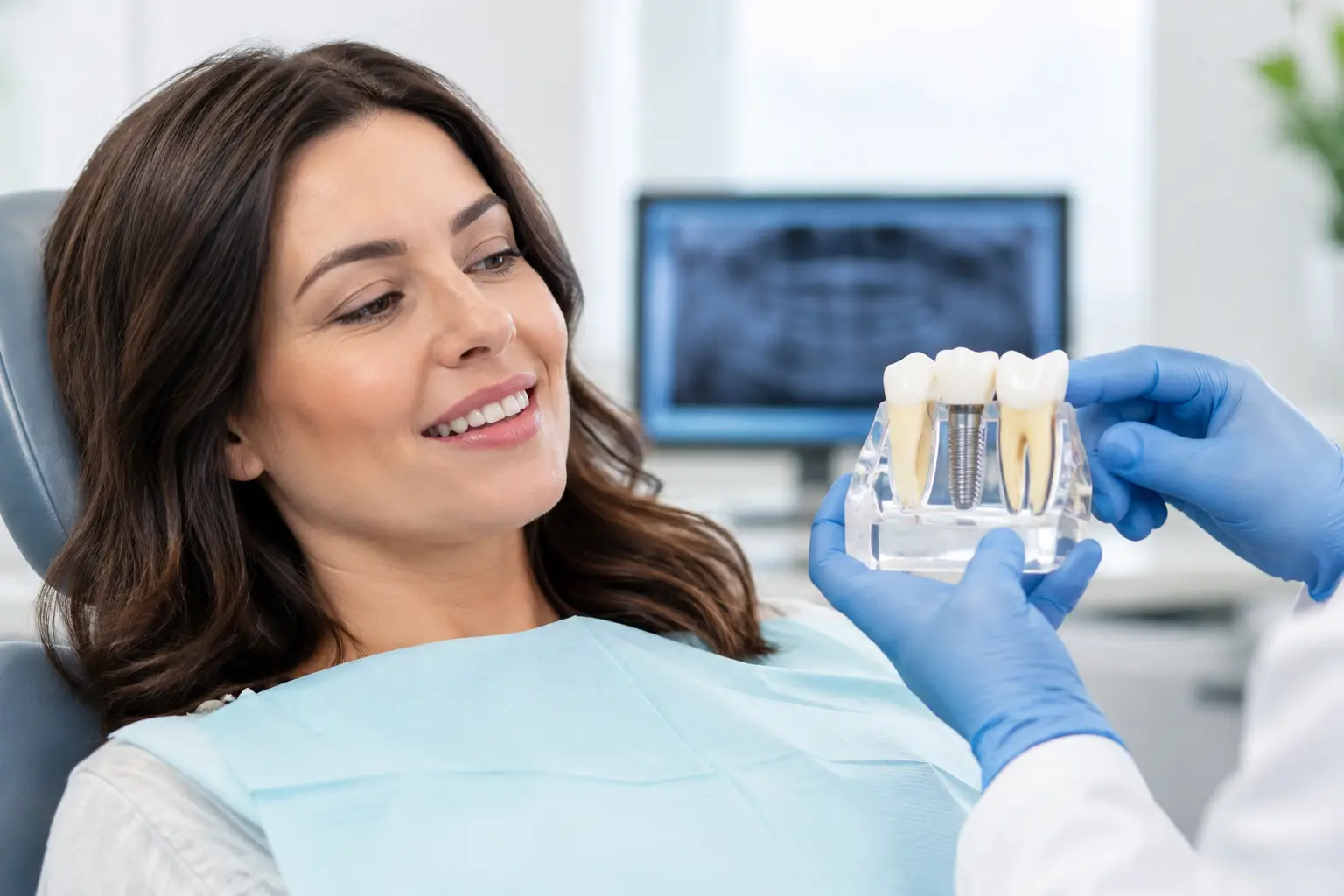
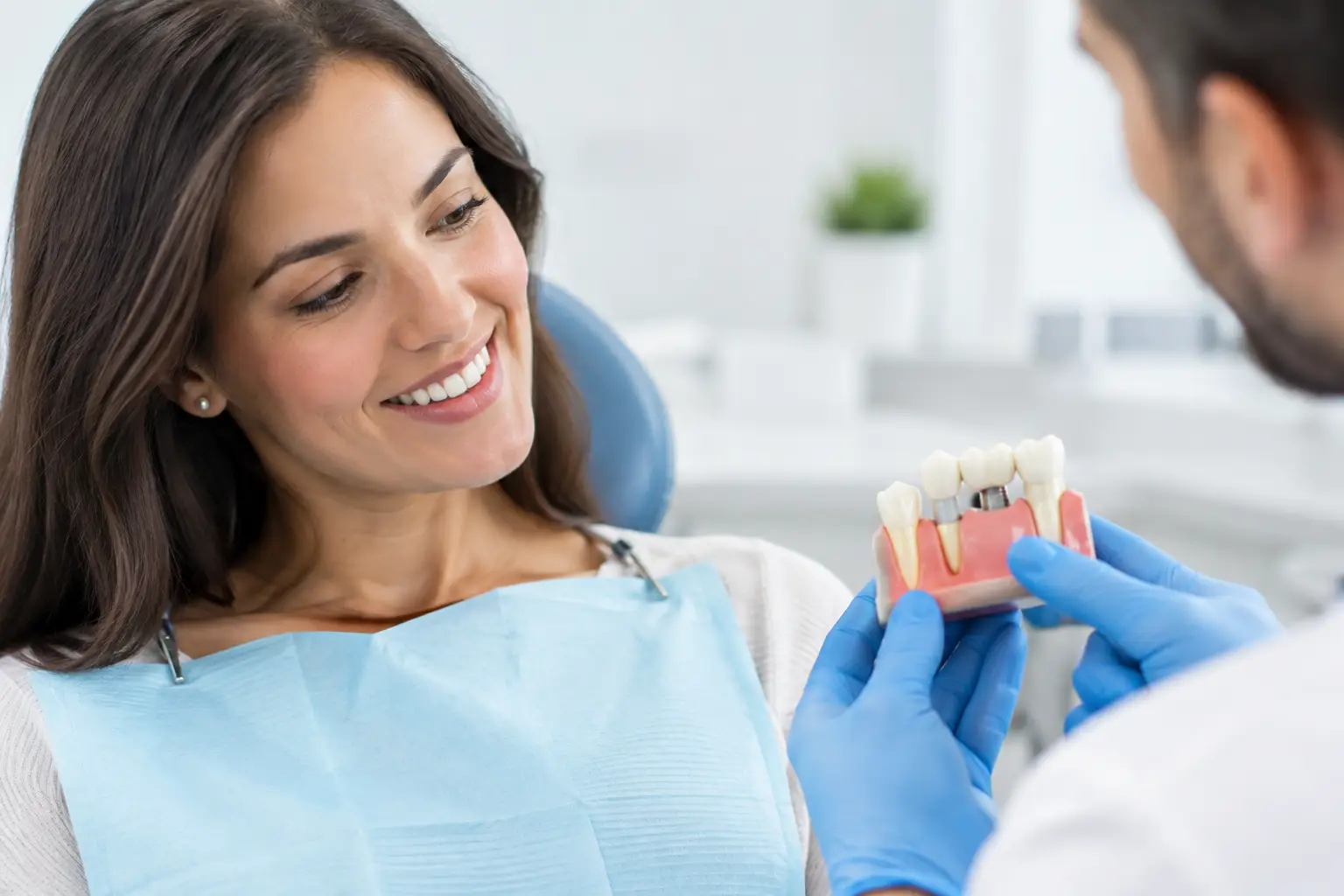
A dental implant replaces the root of the missing tooth with a small titanium post placed in the jawbone. Once the implant has healed and integrated with the bone, a custom crown is attached. The crown is designed to blend with the colour, shape, and size of your natural front teeth.
For many adults, an implant is a strong long-term option because it does not require reshaping the teeth beside the gap. It also helps stimulate the jawbone in the area of the missing tooth. With consistent brushing, flossing, and professional care, an implant-supported crown can provide lasting function and a natural-looking result.
The trade-off is time. Implant treatment commonly takes several months because healing is part of the process. Some patients need bone grafting first if there is not enough healthy bone to support the implant. Medical history, smoking, active gum disease, and oral hygiene can also affect whether implant treatment is appropriate.
Dental bridge
A traditional dental bridge fills the space with an artificial tooth supported by crowns on the teeth next to it. It is fixed in place, so it does not come out for cleaning. A bridge can often be completed more quickly than an implant and may be an appropriate solution when the adjacent teeth already need crowns because of large fillings, cracks, or wear.
The main consideration is that the supporting teeth must be prepared to hold the crowns. A bridge does not replace the missing tooth root, so it does not provide the same bone stimulation as an implant. It also requires careful daily cleaning under the replacement tooth to protect the gums and supporting teeth.
For the right patient, however, a bridge can restore appearance and chewing ability very effectively. Your dentist can explain how the materials, bite forces, and condition of neighbouring teeth influence the expected outcome.
Removable partial denture
A removable partial denture uses a replacement tooth attached to a lightweight base that fits around your existing teeth. It is usually a more affordable way to replace a front tooth, and it can be made relatively quickly in many cases.
This option may be useful for patients who are not ready for an implant or bridge, need to replace several teeth, or want a temporary solution while planning future treatment. Modern partial dentures can look natural, but they do require removal for cleaning and may take time to get used to. Their fit may also need adjustment as the mouth changes.
Temporary tooth replacement
After an extraction or a front-tooth injury, many patients do not want to wait with a visible gap. A temporary flipper, temporary partial denture, bonded temporary tooth, or immediate provisional restoration may be considered, depending on the situation.
Temporary options protect confidence during healing and can help you speak and smile more comfortably. They are not designed to withstand the same biting forces as a permanent crown, bridge, or implant restoration. Avoid biting directly into firm foods with a temporary front tooth unless your dentist advises otherwise.
Choosing the Right Option for Your Smile
The best approach is personal. An implant may be preferable when preserving jawbone and avoiding work on healthy neighbouring teeth are priorities. A bridge may make sense when nearby teeth already require crowns or when a faster fixed solution is preferred. A partial denture may be suitable when cost, medical considerations, or the number of missing teeth makes a removable option more practical.
Appearance matters, especially at the front of the mouth. Your dentist will consider more than the shade of the replacement tooth. The contour of your gumline, the translucency of your natural teeth, the spacing in your smile, and the way your upper and lower teeth meet all contribute to a result that looks balanced.
It is also reasonable to discuss cost and insurance early in the planning process. Coverage varies between plans and treatments. At DentiFlow Dentistry, the team can help patients understand their treatment plan, discuss available options, and manage direct insurance billing where applicable. Patients eligible for the Canadian Dental Care Plan can also ask how their coverage may apply.
Caring for Your Replacement Tooth
A replacement front tooth still depends on good daily care. Brush twice a day with a soft toothbrush and fluoride toothpaste, clean between your teeth every day, and attend regular dental exams and hygiene appointments. If you have a bridge, your dentist or hygienist can show you how to clean beneath it. If you have an implant, the surrounding gum tissue needs just as much attention as your natural teeth.
Avoid using your front teeth to open packages, cut fishing line, or bite fingernails. If you grind or clench your teeth, a custom night guard may help protect your natural teeth and dental work from excessive pressure. Contact your dentist if you notice loosening, a change in bite, bleeding gums, swelling, or discomfort around the replacement tooth.
A missing front tooth deserves prompt, thoughtful care, but you do not need to decide on the spot. Booking an examination gives you a clear picture of your oral health, the treatments available, and a practical plan for restoring your smile with confidence.