A missing tooth can change more than a smile. It can make chewing feel uncertain, affect speech, and leave neighbouring teeth without the support they need. An implants versus dentures comparison can help you understand two proven ways to replace teeth, but the best choice depends on your mouth, health, lifestyle, timeline, and budget.
For many patients in Thornhill and nearby communities, the decision is not simply about choosing the most advanced option. It is about finding a solution that feels comfortable, restores everyday function, and is practical to maintain over time.
Implants versus dentures comparison: the basic difference
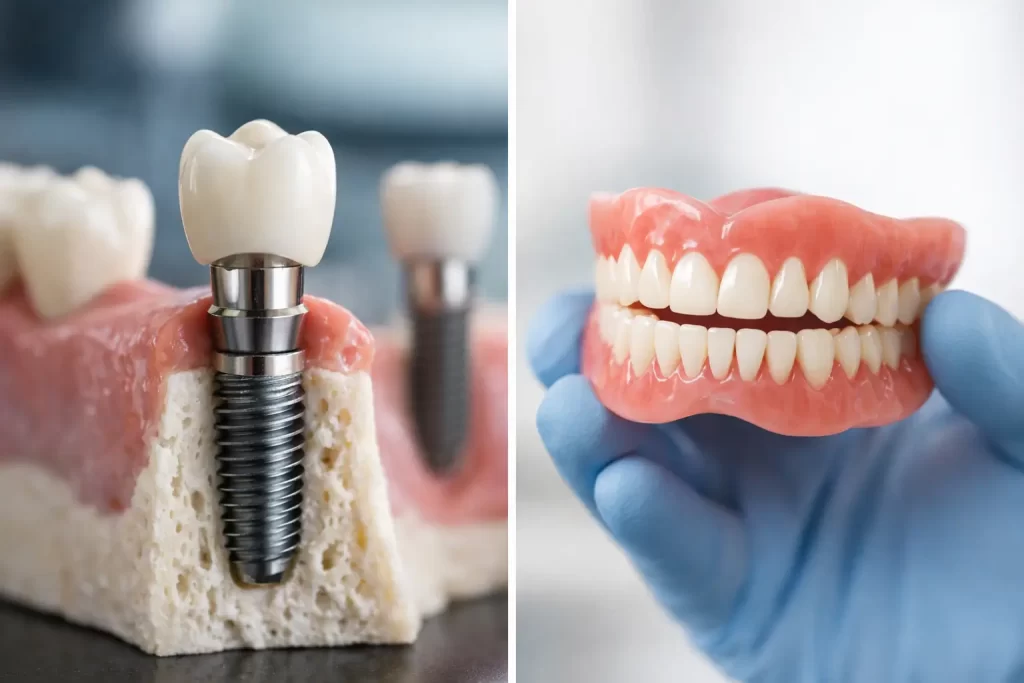
Dental implants replace the root portion of a missing tooth. A small titanium post is placed in the jawbone, where it gradually integrates with the bone. Once healing is complete, it can support a crown for one tooth, a bridge for several teeth, or a full fixed restoration in suitable cases.
Dentures are removable appliances that replace some or all missing teeth. A partial denture fits around remaining natural teeth, while a complete denture replaces an entire upper or lower arch. Modern dentures are carefully designed to improve appearance and function, but they rest on the gums rather than being anchored in the bone.
Both options can be valuable. The question is which approach best addresses your specific needs.
Comfort and everyday function
Implants often feel closest to natural teeth because they are fixed in place. Patients can generally speak, smile, and eat without removing them. A single implant crown is cleaned much like a natural tooth, and implant-supported bridges can provide stable chewing support when several teeth are missing.
Traditional dentures can restore a great deal of function, especially when they are well fitted and regularly adjusted. However, they may move slightly while eating or talking, particularly lower dentures. Denture adhesive can help some patients, but it does not replace a proper fit. Certain hard, sticky, or chewy foods may remain more challenging than they would be with implant-supported teeth.
There is also a middle option. Implant-supported dentures use a small number of implants to help secure a removable denture. For patients who want more stability but do not need or prefer a fully fixed restoration, this can be a practical compromise.
Bone health matters after tooth loss
When a tooth is lost, the jawbone in that area no longer receives normal chewing stimulation. Over time, the bone can shrink. This natural process may alter facial support and can make a denture looser as the shape of the gums and jaw changes.
Because an implant transfers chewing forces into the jawbone, it can help preserve bone in the area around the implant. It does not stop all age-related changes in the mouth, but it offers an important advantage for long-term support.
Dentures do not stimulate the bone in the same way. This does not mean dentures are a poor treatment. They remain an appropriate choice for many people, including patients who are not ready for surgery or who have health considerations that make implant treatment less suitable. It does mean that follow-up care is especially important. Dentures may need relining, repair, or replacement as the mouth changes.
Treatment time and the process involved
Dentures can often be completed more quickly than implants, particularly after teeth have already been removed and the gums have healed. The process includes impressions or digital scans, bite measurements, try-in appointments, and adjustments to improve fit and appearance. Immediate dentures may sometimes be placed on the day teeth are removed, although adjustments are commonly needed during healing.
Implant treatment takes longer because the post needs time to integrate with the jawbone. Some cases allow for a temporary tooth soon after placement, while others require a healing period before the final crown, bridge, or denture is attached. If there is insufficient bone, a grafting procedure may be recommended before or alongside implant placement, which can add time.
The extra time can be worthwhile for patients who want a fixed, long-lasting replacement. Still, a longer treatment timeline is not automatically the right fit for every situation. If pain, infection, or a damaged tooth requires prompt attention, your dentist can first focus on stabilizing your oral health and then discuss replacement options.
Cost, insurance, and long-term planning
Initial cost is often one of the clearest differences in an implants versus dentures comparison. Traditional dentures usually have a lower upfront cost than implants. Implant treatment involves surgery, custom components, and a final restoration, so the investment is generally higher.
Looking only at the initial price can be misleading, though. Dentures may need periodic adjustments, relines, repairs, or replacement. Implant crowns and bridges also require maintenance and can eventually need repair or replacement. Daily home care and regular dental visits are essential for either option.
Insurance coverage varies widely by plan. Some plans contribute toward dentures but provide limited implant coverage, while others may cover portions of the restoration or related treatment. The Canadian Dental Care Plan may help eligible patients with certain dental services, subject to program rules and coverage requirements. Before treatment begins, it is sensible to review the recommended plan, expected costs, and available coverage so there are no surprises.
Who may be a good candidate for implants?
Implant candidacy is based on more than age. Many older adults are excellent candidates, while some younger patients may need to wait until jaw growth is complete. Your dentist will assess the health of your gums, the amount and quality of bone, your bite, medical history, and the condition of any remaining teeth.
Smoking, uncontrolled diabetes, active gum disease, and certain medications can affect healing and treatment planning. These factors do not always rule out implants, but they deserve careful discussion. Good oral hygiene and regular professional care are also essential, since implants can develop inflammation if plaque accumulates around them.
Dentures may be the better choice when a patient wants to avoid surgery, needs a faster replacement, has limited bone and does not wish to pursue grafting, or prefers the lower initial cost. A partial denture can also be a useful interim solution while a patient decides whether implant treatment is right for them.
Caring for implants and dentures
An implant crown is not immune to dental problems. Although it cannot develop a cavity, the surrounding gums and bone still need protection. Brushing, cleaning between teeth or under bridges as instructed, and attending regular exams and hygiene visits help maintain implant health.
Dentures should be removed and cleaned daily with products designed for dentures. They should not be cleaned with toothpaste, which can be abrasive. When dentures are out, gently clean the gums, tongue, and any remaining natural teeth. Unless your dentist gives different instructions, dentures are usually left out overnight to give oral tissues a rest.
If a denture begins to rub, click, feel loose, or cause sores, do not try to adjust it yourself. A professional adjustment can protect your gums and improve comfort.
Choosing a replacement that fits your life
A good decision starts with a complete examination, not a one-size-fits-all recommendation. Your dentist can evaluate the missing-tooth area, discuss the health of your remaining teeth, take appropriate imaging, and explain whether a crown, bridge, partial denture, complete denture, implant, or implant-supported denture is most appropriate.
At DentiFlow Dentistry, patients can discuss restorative options in the context of their broader oral health, including gum care, existing dental work, bite concerns, and future maintenance. That continuity matters because replacing a tooth is not only about filling a gap. It is about supporting a healthy, functional mouth for the years ahead.
If you are weighing implants against dentures, bring your daily priorities to the conversation: the foods you want to eat, how you feel about removable appliances, your treatment timeline, and what you are comfortable investing. A clear, personalized plan can make the next step feel much more manageable.