
A tooth can be knocked out in seconds – during a hockey game, a bike fall, a playground collision, or an unexpected slip. Knowing how to handle a knocked tooth before you leave for the dentist can make a real difference to the chance of saving it. Stay calm, act promptly, and focus on protecting both the person and the tooth.
A knocked-out permanent tooth is a dental emergency. The sooner it is assessed and, when appropriate, placed back into its socket, the better the outlook. Ideally, treatment should begin within 30 minutes, although it is still worth seeking urgent dental care if more time has passed.
First, check for a more serious injury
Before focusing on the tooth, make sure the person is safe. If there is loss of consciousness, repeated vomiting, confusion, severe facial bleeding, trouble breathing, or a suspected jaw fracture, call 911 or go to the nearest emergency department. A head injury needs medical attention first.
If the person is alert, have them sit upright and lean slightly forward. This helps reduce swallowing blood. Apply gentle pressure with clean gauze or a clean cloth to control bleeding from the gums, lip, or tongue. A cold compress held against the outside of the cheek can help limit swelling and discomfort.
Do not assume that a tooth is the only concern. A hard impact can also crack the jaw, loosen neighbouring teeth, damage the lips, or leave small tooth fragments in the mouth.
How to handle a knocked tooth safely
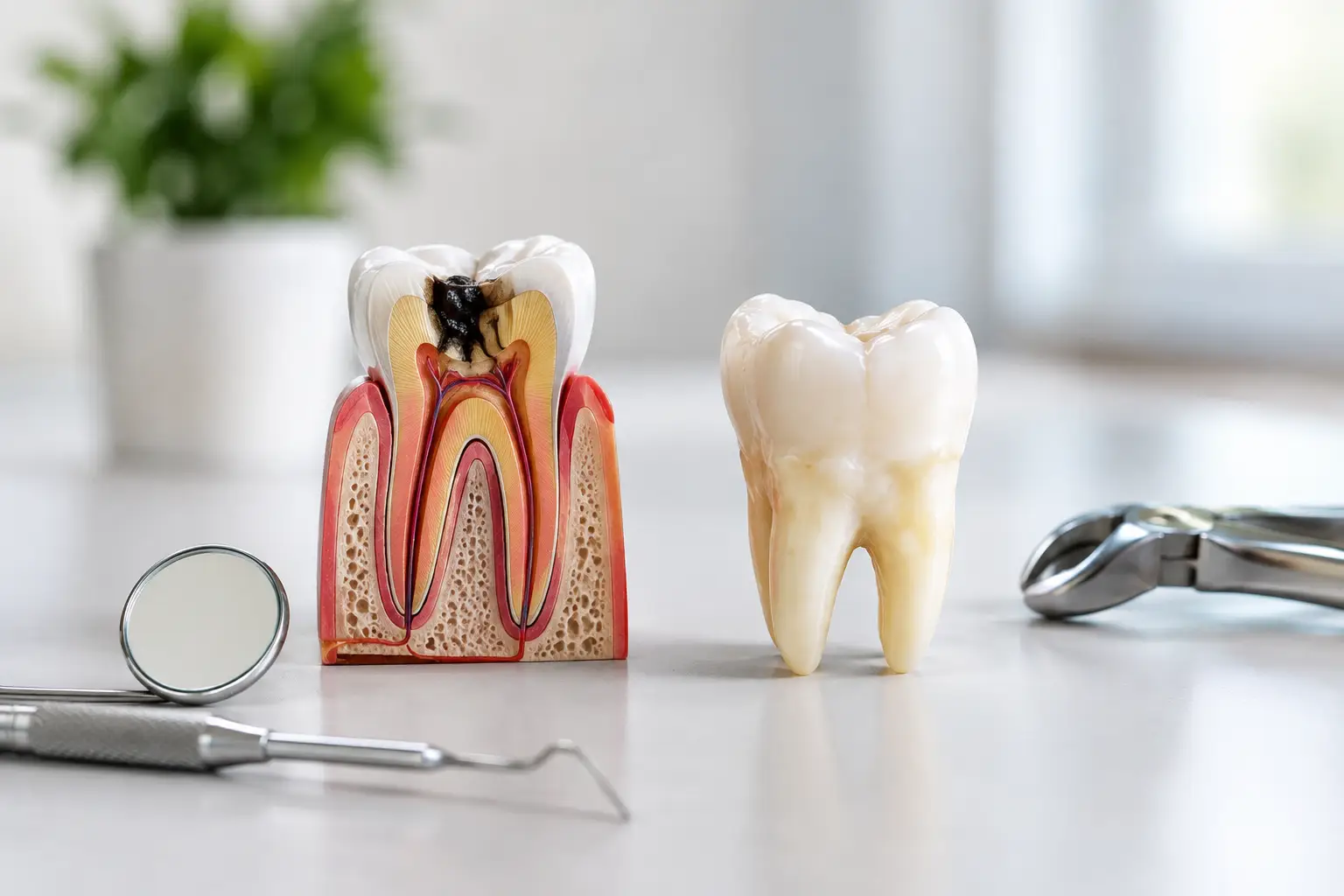
Find the tooth as quickly as possible. Pick it up by the crown, which is the white part normally visible above the gumline. Do not touch, scrub, or wipe the root. The root has delicate living cells that help a dentist reattach the tooth successfully.
If the tooth is dirty, rinse it very briefly with milk, saline, or clean running water. Do not use soap, disinfectant, alcohol, toothpaste, or a brush. Avoid wrapping it in tissue or cloth, as the tooth can dry out or be accidentally thrown away.
If it is clearly a permanent tooth and the person is calm and cooperative, gently place it back in the socket. Hold it by the crown, check that it is facing the right way, and ease it into place without forcing it. Have the person bite gently on clean gauze to help hold it there while travelling to the dental clinic.
If you are unsure whether it is a baby tooth or a permanent tooth, do not try to put it back in. Store it safely and seek urgent dental advice instead.
Keep the tooth moist if you cannot replace it
A tooth should never be allowed to dry out. The best storage option is cold milk. Place the tooth in a clean container with enough milk to cover it, then go directly for emergency dental care.
If milk is not available, sterile saline is another suitable choice. An older child or adult who is fully alert may also hold the tooth between the cheek and gum, but this is not appropriate for young children or anyone who may swallow it.
Plain water is not the preferred storage method, but a brief rinse is better than leaving visible dirt on the tooth. Do not store the tooth dry, in ice, or in a sports drink.
Is it a baby tooth or a permanent tooth?
This distinction matters. A baby tooth that has been completely knocked out should not be placed back into the socket. Reinserting it could harm the developing permanent tooth underneath.
Permanent front teeth commonly come in between ages six and eight, so a child in that age range may have a mix of baby and adult teeth. If you are uncertain, bring the tooth with you in milk and let the dentist assess the situation. Even when a baby tooth cannot be replanted, an urgent examination is useful to check for injury to the gums, jaw, and nearby permanent teeth.
A permanent tooth may not look exactly like an adult tooth right away. Newly erupted teeth can have shorter roots or an unusual edge, but they still need prompt care after an injury.
What to do when the tooth is loose, broken, or pushed out of position
Not every dental injury results in a tooth falling out. A tooth may be chipped, cracked, loose, pushed inward, or moved sideways. These injuries also need timely care, particularly in children and teens whose teeth and jaw are still developing.
If a tooth is loose, ask the person not to wiggle it or bite on it. Offer soft foods only and arrange an urgent dental assessment. If a tooth is pushed out of position, do not attempt to force it back unless a dentist specifically instructs you to do so.
For a chipped or broken tooth, collect any pieces you can find and place them in milk or saline. A dentist may be able to reattach a fragment, smooth a sharp edge, or restore the tooth with bonding or another treatment. A crack can extend below the gumline even if the visible damage seems small, so pain-free injuries should not be ignored.
What to expect at an emergency dental visit
At the appointment, the dental team will examine the tooth, gums, bite, and surrounding tissues. X-rays may be needed to check the root, bone, and nearby teeth. If a permanent tooth has been replanted or can be replanted, it may be stabilized with a small flexible splint attached to neighbouring teeth.
The next steps depend on the tooth, the time it spent outside the mouth, the condition of the root, and the person’s age. Some teeth need follow-up monitoring only. Others may require a root canal, restorative treatment, or ongoing observation as healing progresses.
A knocked-out tooth can look settled after it is replanted but still develop complications later. Attend every recommended follow-up visit. The dentist will monitor healing, check for infection or root changes, and confirm that the tooth remains stable.
Care at home after the injury
Follow the dentist’s individual instructions, as they may vary based on the injury. In many cases, a soft-food diet is recommended for a period of time. Avoid biting with the injured teeth, chewing hard foods, and playing contact sports until the area has healed.
Keep the mouth clean. Gentle brushing with a soft toothbrush is usually advised, while a dentist may also recommend a specific rinse. Take pain relief only as directed by a healthcare professional or according to the product label. If swelling, pain, fever, worsening bleeding, or changes in the tooth’s colour occur, contact the dental office promptly.
For injuries caused by a fall outdoors or contact with a dirty surface, ask a medical professional whether tetanus protection needs to be reviewed. This is especially relevant when there are cuts to the skin or gums.
A few seconds of preparation can help
Families with active children may find it helpful to keep a small dental first-aid kit at home and in a sports bag. Clean gauze, a small container, saline, and the number for an emergency dental clinic are practical items to have ready. A well-fitting mouthguard is also one of the best ways to reduce the risk of sports-related dental injuries.
If a tooth is knocked out, do not wait to see whether the pain settles. Bring the tooth, keep it moist, and arrange urgent care. DentiFlow Dentistry can assess dental injuries and help Thornhill-area patients take the next appropriate step when an accident interrupts an ordinary day.