A denture that shifts when you laugh, lifts while you eat, or rubs one sore spot can make ordinary moments feel frustrating. Denture stabilization options are designed to improve how securely a denture sits, but the right answer depends on why it is moving in the first place. A simple adjustment may be enough for one person, while another may benefit from a reline, a new denture, or implant support.
Why dentures can become loose
Dentures are custom-made to rest on your gums and supporting tissues. They do not stay unchanged forever because your mouth does not stay unchanged forever. After natural teeth are removed, the jawbone gradually reshapes. This can reduce the close fit that helped a denture stay in place when it was new.
Weight changes, dry mouth, changes in medications, worn denture teeth, and damage to the denture can also affect comfort and retention. Lower dentures tend to be especially challenging because the lower jaw has less surface area for support, while the tongue and floor of the mouth are constantly moving.
A loose denture is not only an inconvenience. Repeated rubbing can cause sores, make chewing less effective, and lead some people to avoid foods they enjoy. It can also affect speech confidence. An examination helps identify whether the concern is the fit of the denture, the condition of the gums and bone, or a combination of both.
Denture stabilization options to consider
Denture adjustments and bite correction
If a denture has a specific pressure point, feels uneven, or rocks when you bite, a professional adjustment may help. Your dentist can identify areas where the acrylic is pressing too firmly or where the bite is placing excessive force on one side.
This is often the most conservative starting point, particularly when the denture is relatively new or has only minor discomfort. It is not a lasting solution for a denture that has become broadly loose because of significant changes in the jaw ridge. Trying to adjust a denture at home can make the fit worse or create sharp, irritating edges, so it is best left to the dental team.
Denture adhesive for short-term support
Denture adhesive can improve day-to-day grip for some patients, especially with an upper denture that is otherwise well fitted. It may help reduce small movements and keep food particles from getting under the denture during meals.
Adhesive is a support tool, not a repair for a poorly fitting appliance. If you need increasing amounts to keep your denture in place, or if adhesive does not prevent movement, it is time to have the denture assessed. Adhesive should be cleaned off thoroughly each day and used according to the product directions.
Soft liners and denture relines
A soft liner adds a cushioning material to the inside surface of a denture. It may be useful when gums are tender, healing after extractions, or easily irritated by a hard acrylic base. Soft liners can make a denture feel more comfortable, although they require care and may need replacement over time.
A reline reshapes the tissue-facing surface of an existing denture so it better matches your current gums. There are two common approaches. A temporary or soft reline may provide comfort while tissues heal or while a longer-term plan is being decided. A hard reline uses a more durable material and may be appropriate when the denture itself is still in good condition but no longer fits the jaw closely.
Relining is often a practical choice when the denture teeth, appearance, and overall structure remain sound. It is less suitable if the denture is cracked, worn down, poorly designed, or no longer supports a healthy bite.
A new conventional denture
Sometimes replacement is the most sensible option. Denture teeth can wear down over years of use, changing the bite and reducing chewing efficiency. The base can weaken, and facial support or tooth appearance may no longer meet your needs. A new denture can be made with your current oral anatomy, bite, and goals in mind.
A new denture still relies on the gums and underlying ridge for support, so it may not solve every retention challenge, particularly in the lower jaw. However, a carefully planned replacement can offer a major improvement when the existing denture is beyond what adjustment or relining can reasonably address.
Implant-retained dentures
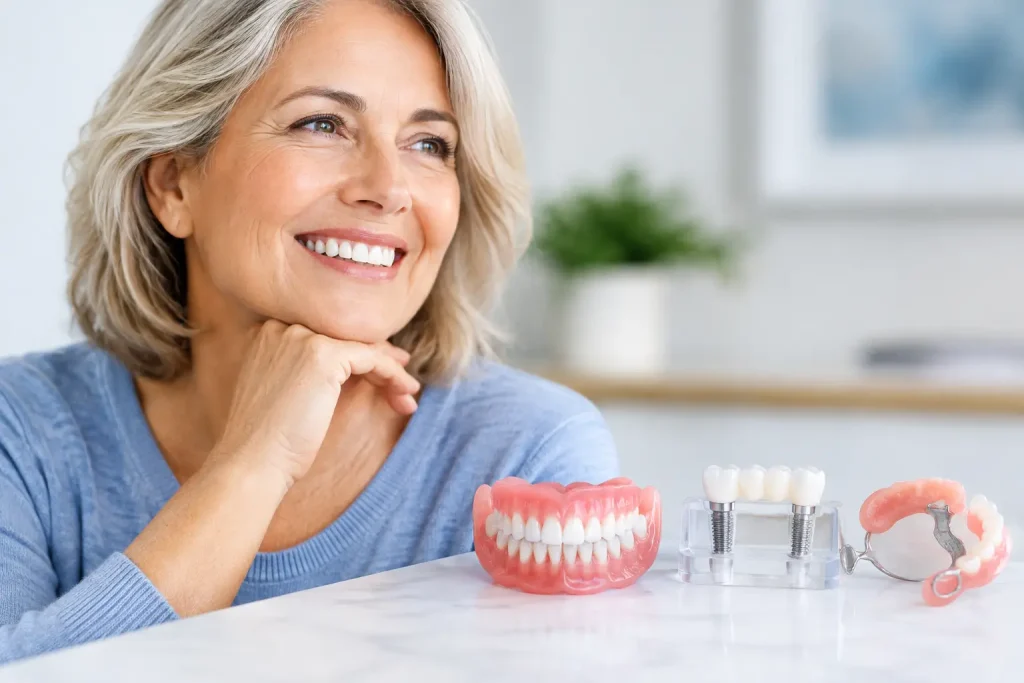
For many people, implant-retained dentures provide a more secure option. Dental implants are small posts placed in the jawbone. After healing, they can connect to a removable denture through attachments. The denture can then be taken out for cleaning while gaining added stability during speaking and eating.
In the lower jaw, two implants are commonly used to support an overdenture. The number of implants and attachment design can vary based on bone availability, the condition of the denture, your bite, and your treatment goals. Some dentures attach with individual locator-style connections, while others use a bar that links implants together.
Implant-retained dentures can reduce movement substantially, but they involve surgery, healing time, ongoing hygiene, and a greater financial commitment than a reline or new conventional denture. The attachments also need periodic maintenance as small components wear with use. A thorough assessment, including imaging and a review of medical history, is needed to determine whether implants are appropriate.
Fixed full-arch implant restorations
A fixed full-arch restoration is different from a removable implant-retained denture. It is secured to multiple implants and can only be removed by a dental professional. For the right patient, it can offer a very stable, natural-feeling solution. It also requires more extensive planning, treatment time, daily cleaning around the restoration, and a larger investment.
This option is not automatically better for everyone. A removable implant-supported denture may meet a patient’s functional needs with a simpler design and easier access for cleaning. The best choice is the one that fits your health, expectations, comfort, and ability to maintain it over time.
What to expect from a stabilization assessment
A denture assessment begins with more than asking whether it feels loose. Your dentist will examine the fit of the denture, the health of the gums, areas of irritation, the bite, and the amount of support available from the jaw ridge. Existing dentures are also checked for cracks, worn teeth, and changes in shape.
If implant support is being considered, imaging may be used to evaluate bone and plan implant placement safely. Your medical history matters as well. Conditions that affect healing, smoking, certain medications, and oral hygiene routines can influence timing and suitability. These factors do not always rule out implants, but they should be discussed openly before treatment begins.
Bring your current denture to the appointment, even if you have stopped wearing it because it is uncomfortable. It provides useful information about where the fit has changed and what you would like to improve. Be specific about the situations that cause difficulty: eating firmer foods, speaking at work, coughing, smiling, or keeping the lower denture stable.
Caring for a stabilized denture
Every stabilization method still requires regular care. Remove and clean a removable denture daily with products intended for dentures, not abrasive toothpaste. Clean your gums, tongue, and any remaining natural teeth. If your denture clips onto implants, clean around the attachments carefully and attend regular visits so worn parts can be replaced before they affect the fit.
Do not ignore persistent soreness, clicking, cracks, or a sudden change in how your denture sits. These concerns are often easier to address early. Regular dental visits also allow your dentist to check the health of your mouth, screen for changes in oral tissues, and keep your restoration working as comfortably as possible.
You do not have to accept a denture that limits what you eat or makes you self-conscious in conversation. At DentiFlow Dentistry, an assessment can clarify whether a small fit adjustment, a reline, a replacement denture, or implant support is the most practical next step for your smile and daily comfort.