If you’re weighing a checkup but unsure about the bill, you’re not alone. Patients ask us about general dental exams every day—what’s included, how pricing works, and how to keep things predictable. The short answer: your dental exam cost in 2025 depends on the type of visit (new-patient, routine recall, or problem-focused), the records we need to make good decisions, and whether a same-day cleaning or X-rays are added. Below, we map realistic ranges for Thornhill, explain what drives totals up or down, and show how to keep the experience clear and calm from the moment you book.
What Does a Dental Exam Include?
A proper exam is an information-gathering visit: health history, a close look at teeth and gums, bite assessment, and a screen of soft tissues. The goal is to catch small changes before they turn into bigger (and more expensive) problems. Exams scale to you rather than a one-size-fits-all checklist, which is why the dental exam cost can differ between two patients who both booked a “checkup.”
Average Dental Exam Cost in Thornhill (2025)
Every clinic sets its own fees, but Ontario offices often consider the ODA’s annual Suggested Fee Guide when building their pricing. Here are realistic ranges you’ll see in the GTA for the dental exam cost itself (excludes cleaning and X-rays):
- Comprehensive New-patient Exam: ~$90–$200
- Periodic/recall Exam (Existing Patients): ~$60–$100
- Limited/problem-focused Exam (One Issue): ~$70–$140
Your final dental exam cost will change if we add X-rays or hygiene; we’ll show each line item before anything starts.
Factors That Affect Your Dental Exam Cost
Think of the fee as paying for clarity. Sometimes that means extra information; sometimes it doesn’t.
- Visit Type: Comprehensive baseline vs. routine recall vs. limited/problem-focused
- X-rays Selected: Bitewings (cavities between teeth), periapicals (roots), or panoramic when indicated
- Hygiene Added Today: Scaling is billed by time/units; polish and fluoride are separate line items
- Complexity & History: Extensive prior work, sensitivity, or a recent chip may require more detail
- Technology Used: Photos, scans, or measurements—but only when they change care
We never add a test that doesn’t improve the plan—and we’ll explain why each item matters, so your dental exam cost always feels justified.
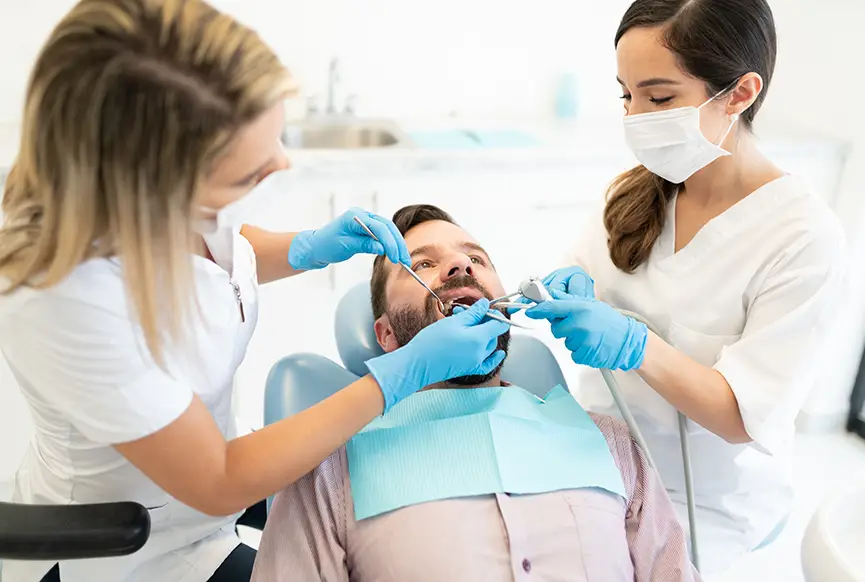
Dental Exam Cost and X-Rays in Thornhill
Good radiographs answer what the eye can’t see: early decay between teeth, root concerns, bone levels, or infection. There isn’t a blanket rule for “how often.” X-rays are ordered based on your age, risk, and symptoms—only when they change decisions. That’s smarter care and a smarter dental exam cost.
Typical X-ray ranges (Ontario):
- Bitewings (2–4 films): ~$40–$120
- Periapical (single tooth/area): ~$25–$60
- Panoramic: ~$80–$120
Your visit may need none, one, or a set—driven by what answers we need that day.
What's Included in a Dental Exam at DentiFlow Dentistry
A strong exam leaves you with answers, not guesswork. Expect:
- Medical & dental history review (medications, allergies, past work, goals)
- Teeth & gum evaluation (including a periodontal screen; deeper charting if needed)
- Caries & fracture screen to catch early changes
- Bite/TMJ check for signs of clenching or wear
- Personalized plan for what’s urgent, what can wait, and home-care steps that help
That clarity is the real value behind the dental exam cost: you leave knowing exactly where you stand and what’s next.
More: How Much Does Professional Dental Cleaning Cost in 2025?
Dental Insurance and Exam Costs Explained
Benefits help, but every plan has its own rules. Here’s how we keep the numbers predictable:
- We verify coverage up front for exams and any indicated X-rays, then show the plan’s portion vs. yours—before treatment.
- We stage care when helpful, so you can time major items wisely and keep your dental exam cost in the “routine maintenance” zone.
- We follow evidence-based intervals for records; if we don’t need a test, we won’t order it.
How to Keep Your Dental Exam Cost Lower
A few steady habits save both teeth and money:
- Keep Your Recall Rhythm: Routine checks catch issues early (fewer emergencies, smaller bills).
- Time X-rays Sensibly: Only when risk and findings say they’ll change care.
- Flag Changes Early: Sensitivity, a chipped edge, or gum bleeding help us focus the visit.
- Clean Between Teeth Daily: Floss or interdental brushes reduce future treatment.
- Ask for Priorities: We’ll sequence urgent items first and spread non-urgent work to fit your budget.
These small moves keep your dental exam cost predictable and your mouth stable year-round.

Step-by-Step: What to Expect at Your Exam
You’ll check in, we’ll listen to your goals, and we’ll capture only the records that improve decisions. If you’ve booked an exam with a cleaning, we’ll stage it efficiently so you’re not back and forth. Before anything starts, you’ll see the estimate—exam, any X-rays, and optional hygiene services—with today’s and long-term options side by side. If two clinical paths make sense at different price points, you’ll see both, and we’ll help you choose.
Dental Exam Cost in Thornhill: 2025 Bottom Line
Plan for a dental exam cost of roughly $60–$200+ for the exam itself in Thornhill, with totals changing when X-rays or same-day hygiene are part of the visit. Ranges reflect common GTA pricing; exact figures vary by patient, records needed, and complexity. You’ll always see a line-by-line estimate first—so you can make an informed decision without surprises.
Ready for a straightforward visit? Book your exam at DentiFlow Dentistry in Thornhill. We’ll listen first, examine second, and map clear options—plus the estimate—before anything begins. That way, you leave with answers, a plan you trust, and a number that makes sense.
FAQs
How much does a dental exam cost in Thornhill in 2025?
Expect $60–$200+, depending on whether it’s a new-patient exam, recall exam, or problem-focused visit. Costs rise if X-rays or cleaning are added.
Do dental exam costs include X-rays?
Not always. X-rays are billed separately and ordered only when clinically needed. Typical ranges: $25–$120 depending on the type.
Will my insurance cover dental exams?
Most plans cover routine exams and X-rays. At DentiFlow, we verify benefits upfront and show your plan’s portion vs. your share before treatment.
How often should I book a dental exam?
Most patients benefit from a dental exam every six months. Higher-risk patients (gum disease, frequent cavities) may need more frequent visits.
How can I reduce my dental exam costs long-term?
Stick to routine recall visits, practice good home care, and flag any changes early. Prevention saves more than emergency treatment.