Teeth don’t retire. They keep working through new routines, new medications, and sometimes new challenges. That’s where dentistry for seniors earns its place—care that’s practical, comfortable, and designed for this stage of life. At DentiFlow Dentistry in Thornhill, Ontario, our priority is simple: keep you chewing comfortably, smiling confidently, and visiting on a schedule that suits your energy. If you’ve been reading up on general senior dentistry, here’s a guide to what changes, which treatments help most, and how to keep appointments calm and predictable.
Dentistry for Seniors: Why Mouths Change as We Age
Aging doesn’t automatically mean dental trouble, but a few shifts are common:
- Drier mouth: Many heart, blood pressure, and mood medications lower saliva. Less saliva = higher cavity risk, especially along the gumline.
- Gum changes: Plaque is harder to control if dexterity dips. Gums may bleed, and pockets can deepen without steady care.
- Wear and tear: Old fillings can loosen, enamel thins, and tiny cracks show up on chewing teeth.
- Whole-body links: Diabetes, heart disease, osteoporosis—what happens in the body shows up in the mouth (and vice versa).
Dentistry for seniors leans into prevention, gentle techniques, and materials that hold up to daily life.
The Daily Basics That Still Make the Biggest Difference
Small habits are the backbone of a comfortable mouth:
- Electric brush with a soft head: Easier on hands and wrists, tougher on plaque.
- High-fluoride toothpaste (or prescription if needed): Protects vulnerable root surfaces.
- Interdental tools you’ll actually use: Wider-handled flossers or interdental brushes; water flossers for hard-to-reach areas.
- Dry-mouth support: Sip water often, use xylitol lozenges, and consider a bedroom humidifier.
- Bring your medication list: We’ll spot dryness culprits and share ideas you can discuss with your physician.
With dentistry for seniors, the goal is doable routines—not perfect ones.
Restorative Care: Fix What Matters, Keep What's Strong
Repairs should be conservative, comfortable, and clear:
- Tooth-coloured fillings or onlays seal new decay and reinforce worn edges with minimal drilling.
- Crowns protect cracked or heavily filled molars so they last under chewing load.
- Root canal therapy preserves a painful tooth instead of pulling it—often the most comfortable option.
- Thoughtful extractions when a tooth can’t be saved, paired with a plan to replace it, so chewing stays balanced.
We can stage treatment—shorter visits, spread across weeks—so you leave feeling better, not worn out.
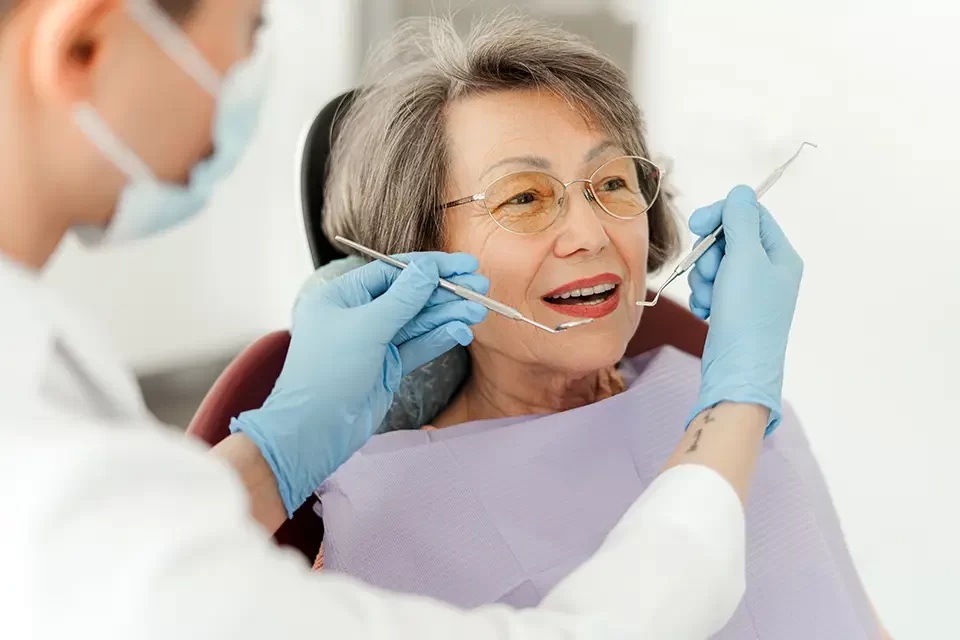
Dentistry for Seniors: Dry Mouth & Cavity Control
Dry mouth turns small issues into bigger ones. Here’s the play:
- Fluoride, daily: Prescription toothpaste at night; in-office varnish at cleanings.
- Rinse after meals: Especially after acidic foods and sweet drinks.
- If meds are the cause: Sometimes timing or alternatives (with your physician’s approval) reduce dryness.
- Custom trays (when needed): A few minutes with fluoride gel at home can harden soft root areas.
In dentistry for seniors, dryness management often decides whether a mouth stays stable or keeps needing new fillings.
Gum Health: Gentle, Thorough, Predictable
Healthy gums are quiet—and that’s what we want.
- Cleanings at the right interval: Some do best every 3–4 months; others at six. Your history decides.
- Comfort-first techniques: Micro-ultrasonic scalers and hand instruments that are thorough without trauma.
- Home-care coaching you’ll keep: Larger grips, easier tools, short routines.
- Coordination with your healthcare team: For diabetes control, new meds, or bone health changes.
Calm gums make everything else—from eating to sleep—more comfortable.
Replacing Missing Teeth: Picking What Fits Your Life
There’s no single winner. The “best” option is the one you’ll use and care for.
- Dental implants: Fixed, strong, and kind to neighbouring teeth. Great bite strength; needs healthy bone and good hygiene.
- Bridges: Useful when adjacent teeth already need crowns. Faster path back to chewing; cleaning under the bridge is the key.
- Dentures (partial or full): Budget-friendly and adaptable. Modern designs fit better; periodic relines keep them snug as gums change.
In dentistry for seniors, we often mix solutions—an implant here, a small partial there—to hit the sweet spot of stability and simplicity.
Making Visits Easier: Comfort, Mobility, Peace of Mind
A few tweaks turn good care into a good experience:
- Shorter appointments with breaks when you need them.
- Noise reduction and hand signals if dental sounds raise your heart rate.
- Easy access and room to maneuver for walkers and wheelchairs.
- Clear take-home notes—what we did, what’s next, and who to call.
You should leave feeling looked after, not overwhelmed.
Dentistry for Seniors: Planning and Costs
Clarity lowers stress:
- Itemized plans that separate prevention, repairs, and replacements.
- Staging when that’s kinder to your schedule and budget.
- Maintenance built in, so recalls and supplies don’t sneak up on you.
Ask anything. Transparent answers are part of the service at DentiFlow Dentistry in Thornhill.
Dentistry for Seniors: Frequently Asked Treatments
- Whitening, gently done: If your teeth are healthy but darker than you like, mild-strength, supervised whitening can refresh shade without sensitivity spikes.
- Small bonding repairs: Chips, edges, little gaps—quick fixes that protect and polish in a single visit.
- Bite guards for clenching: Spread forces, protect dental work, and often improve morning comfort.
The common thread in dentistry for seniors is restraint: do enough to help, not so much that you’re maintaining treatment instead of teeth.

How DentiFlow Dentistry Supports Seniors in Thornhill
Your goals lead; we build around them:
- Continuity: See a dental professional who knows your history and follows your progress.
- Prevention with payoff: High-fluoride support, dry-mouth strategies, and tools that fit your hands and habits.
- Comfort-first treatment: Conservative dentistry, gentle cleanings, bite-aware restorations.
- Follow-through: Written summaries, reminder calls, and flexible scheduling for you or your caregiver.
That’s dentistry for seniors the way it should feel—calm, clear, and reliable.
Conclusion
Strong, comfortable teeth make daily life easier—meals, conversations, and the simple confidence to smile. With dentistry for seniors, small, steady habits and thoughtful, conservative care go a very long way. If you’re due for a check-in—or something’s been nagging—let’s look together and set a plan that fits your pace.
Ready to get started? Book a visit with DentiFlow Dentistry in Thornhill, Ontario. Bring your medication list and any recent health updates. We’ll review what’s working, tune what isn’t, and map a simple path to keep your smile healthy and comfortable.
FAQs: Dentistry for Seniors
How often should seniors see a dental professional?
Most do well with cleanings every 3–6 months. The right interval depends on gum health, dryness, and cavity history.
Are implants safe for older adults?
Age alone isn’t the issue. Overall health, bone quality, hygiene, and medications matter more. Many older adults do very well with implant solutions.
What helps with dry mouth at night?
Hydration, xylitol lozenges, a humidifier, and avoiding alcohol-based mouthwashes. If medications drive dryness, ask your physician about timing or alternatives.
Can dental problems affect overall health?
Yes. Gum inflammation is linked with blood sugar control and heart health. Keeping gums calm supports comfort—and general wellbeing.